 EN
EN

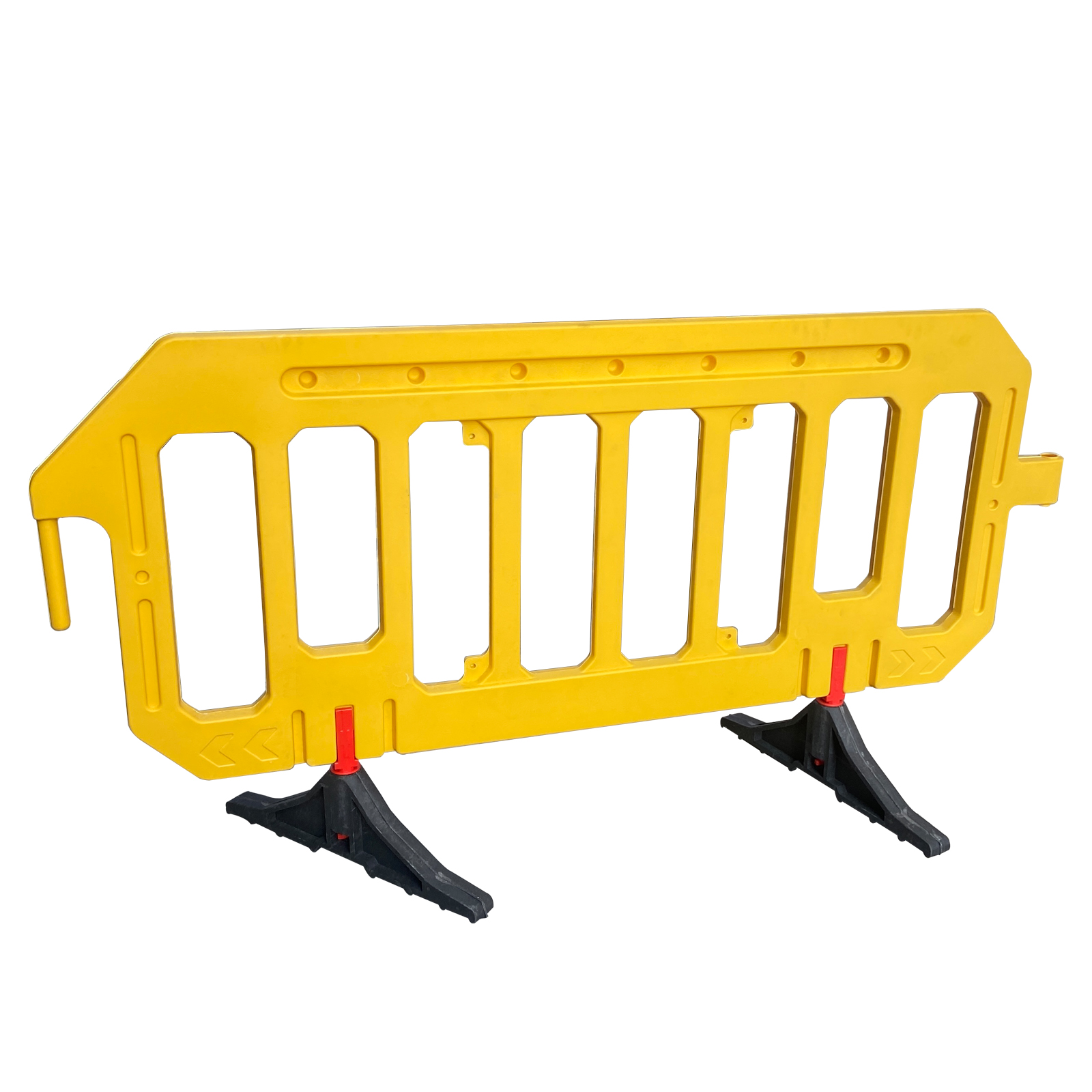
Custom Water-Filled Barrier Solutions for Large-Scale Projects
In modern traffic management, construction safety, and event control, the barrier has evolved from a simple obstruction into a highly engineered safety product. Today’s water-filled barrier is designed not only for impact resistance and visibility, but also for cost efficiency, branding flexibility, and scalable supply. For distributors, contractors, and government buyers, sourcing barriers directly from a factory with molding, customization, and logistics capabilities can significantly improve project outcomes. By working with a manufacturer that supports water barrier OEM programs, blow molded production, and custom color & logo services, buyers gain better control over quality, consistency, and long-term costs.
Manufacturing Process Behind Water-Filled Barriers
Blow molded technology for consistent barrier quality
The core of a high-performance barrier lies in its manufacturing process. Most water-filled barriers are produced using blow molded technology, which allows molten plastic to expand uniformly inside a mold. This process creates hollow, seamless structures that can be filled with water or sand, giving the barrier both strength and portability. Blow molded barriers offer excellent wall thickness consistency, which is critical for impact absorption and durability in outdoor environments.
From a manufacturing perspective, blow molded production ensures that each barrier meets strict dimensional tolerances. This consistency is especially important for projects that require barriers to interlock or align precisely over long distances. A factory specializing in barrier production can fine-tune mold designs to improve stacking efficiency, water capacity, and surface finish, all while maintaining stable output for bulk orders.
Material selection and structural performance of barriers
Material choice directly affects how a barrier performs under stress. High-density polyethylene is commonly used because it balances flexibility with strength. When produced through controlled blow molded processes, the resulting barrier resists cracking, UV degradation, and temperature fluctuations. This makes it suitable for highways, construction zones, parking management, and crowd control.
A professional water barrier OEM manufacturer evaluates material grades carefully to match the application. For example, barriers used in high-speed traffic zones may require thicker walls, while barriers for temporary events prioritize lighter weight and faster deployment. This level of material optimization is difficult to achieve when sourcing barriers through traders rather than directly from a factory.
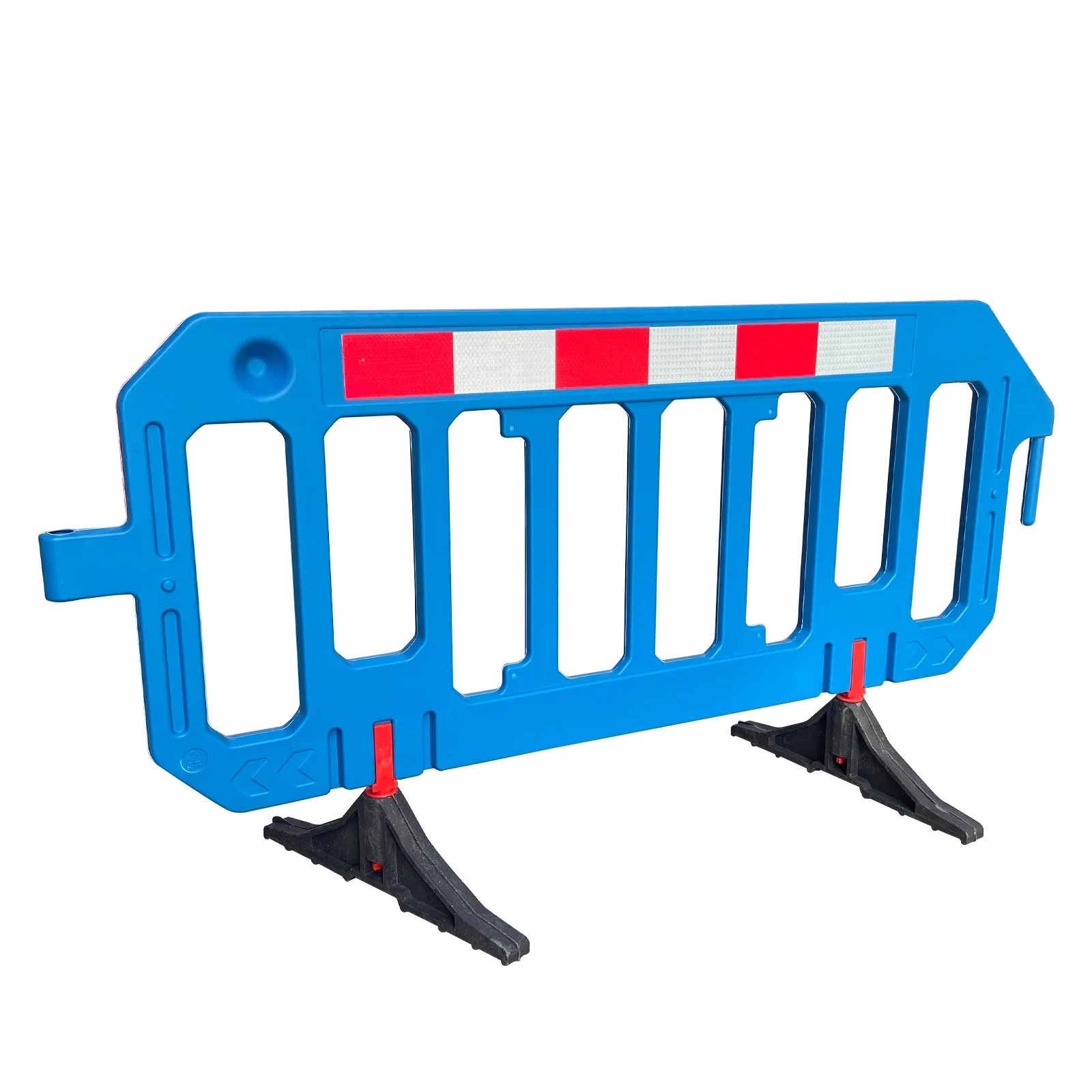
Customization Capabilities for Barrier Projects
Custom color & logo integration for brand visibility
Beyond functionality, a barrier often serves as a visible element in public spaces. Custom color & logo options allow organizations to align barriers with corporate branding, municipal standards, or safety color codes. Through water barrier OEM programs, factories can integrate color pigments directly into the blow molded process, ensuring long-lasting color that does not fade or peel.
Logo customization can be achieved through molded-in branding, hot stamping, or UV printing, depending on project requirements. A barrier with a molded logo maintains its identity even after years of outdoor exposure. This is particularly valuable for rental companies, city authorities, and infrastructure contractors who want their barriers to remain identifiable across multiple projects.
Structural customization for different barrier applications
Not all barrier applications are the same. Some projects require higher water capacity for enhanced impact resistance, while others focus on modular connection systems for rapid installation. A factory-driven water barrier OEM approach allows buyers to request design adjustments such as modified base width, reinforced corners, or customized interlocking mechanisms.
Through direct collaboration with engineers, clients can adapt a standard barrier into a project-specific solution. This level of customization is rarely possible with off-the-shelf products, yet it can significantly improve safety performance and operational efficiency.
Advantages of Water Barrier OEM Manufacturing
Cost control through direct factory sourcing
One of the primary reasons buyers choose water barrier OEM manufacturing is cost transparency. By sourcing barriers directly from a factory, intermediaries are removed from the supply chain. This allows bulk buyers to benefit from raw material optimization, efficient blow molded cycles, and scalable production planning.
Over time, consistent factory sourcing stabilizes pricing and reduces the risk of quality variation. For long-term infrastructure projects, predictable barrier costs make budgeting more accurate and procurement decisions easier to justify.
Quality assurance and compliance for barrier standards
Barrier products are often subject to regional safety and quality standards. A professional manufacturer integrates quality control at every stage, from raw material inspection to final barrier testing. Blow molded barriers can be tested for impact resistance, water leakage, and UV stability before shipment.
With a dedicated water barrier OEM partner, documentation such as material certifications, test reports, and compliance declarations can be provided consistently. This simplifies approval processes for government tenders and large construction projects.
Logistics and Bulk Supply Support for Barriers
Packaging and container optimization for barriers
Logistics efficiency is a critical factor when ordering barriers in bulk. Because barriers are hollow and lightweight before filling, factories can design stackable forms that maximize container utilization. Blow molded barrier designs are often optimized to nest together, reducing shipping volume and freight costs.
An experienced manufacturer understands how packaging affects the landed cost of a barrier. By planning palletization, container loading, and protective packaging in advance, suppliers help buyers avoid unnecessary logistics expenses and delays.
Global shipping coordination for barrier projects
Large-scale barrier projects often involve tight timelines. A factory with logistics support can coordinate shipping schedules, export documentation, and destination port handling. This ensures that barriers arrive on site when needed, whether for road construction, emergency response, or event preparation.
Water barrier OEM suppliers with global experience can also advise on regional shipping regulations and import requirements. This reduces the administrative burden on buyers and minimizes the risk of customs delays.
Application Scenarios for Water-Filled Barriers
Traffic management and road safety barriers
In traffic control, the barrier plays a crucial role in guiding vehicles and protecting workers. Water-filled barriers absorb impact energy more effectively than solid barriers, reducing damage to vehicles and infrastructure. Their visibility can be enhanced through custom color & logo elements, reflective strips, or integrated signage.
Blow molded barriers used in road safety are often deployed for long periods, making durability and UV resistance essential. Factory-produced barriers meet these demands while remaining easy to relocate as traffic patterns change.
Construction, events, and crowd control barriers
Construction sites and public events require flexible barrier solutions. Water-filled barriers can be quickly installed, repositioned, or removed without heavy machinery. This adaptability makes them ideal for temporary setups where safety and order must be maintained.
Through water barrier OEM customization, barriers can be designed to interlock smoothly, creating continuous lines that improve crowd guidance and site security. Branded barriers also enhance the professional image of organizers and contractors.
Sustainability and Reusability of Barrier Systems
Recyclable materials and long service life
Modern barrier manufacturing increasingly emphasizes sustainability. Blow molded barriers made from recyclable polyethylene can be reused across multiple projects and eventually recycled at the end of their service life. This reduces waste and lowers the environmental footprint of large infrastructure programs.
A durable barrier that withstands repeated filling, transport, and storage offers better value over time. OEM manufacturers can further enhance sustainability by optimizing material thickness and reinforcing high-stress areas to extend product lifespan.
Maintenance and lifecycle efficiency of barriers
Water-filled barriers require minimal maintenance. Periodic cleaning and inspection are usually sufficient to keep them in serviceable condition. Because blow molded barriers have seamless construction, they are less prone to leaks or structural failure.
When maintenance is needed, standardized OEM designs make replacement parts and compatibility easier to manage. This consistency is particularly beneficial for fleets of barriers used by municipalities or rental companies.
FAQ
What minimum order quantities typically qualify for bulk pricing on water-filled barriers
Most manufacturers establish bulk pricing thresholds beginning at 50-100 units for standard barrier configurations, with more significant discounts available for orders exceeding 500 units. Custom branding or color requirements may increase minimum order quantities due to tooling and setup costs, typically requiring 200-300 units for cost-effective production runs. Large-scale projects involving thousands of barriers often qualify for the most competitive per-unit pricing and may include additional services such as custom packaging or delivery scheduling coordination.
How long does factory production typically require for large custom barrier orders
Standard production lead times for bulk barrier orders range from 4-8 weeks depending on order size, customization requirements, and manufacturer capacity allocation. Custom molding with integrated branding elements may require additional 2-3 weeks for tooling preparation and sample approval processes. Rush orders can sometimes accommodate accelerated schedules for additional fees, though this depends on raw material availability and production capacity during the requested timeframe.
What transportation options work best for bulk barrier deliveries to project sites
Flatbed truck transportation provides the most cost-effective delivery method for bulk barrier shipments, with typical loads accommodating 40-60 standard barriers depending on size and weight specifications. Regional distribution centers can provide smaller partial loads for phased deliveries that align with project installation schedules. Specialized transportation services offer crane-equipped delivery trucks for sites with limited unloading capabilities or direct placement requirements that minimize double-handling operations.
Can existing barrier inventory be retrofitted with custom branding elements
Existing barrier inventory can accommodate various retrofit branding options including adhesive graphics, magnetic panels, or bolt-on signage systems that maintain structural integrity while adding visual identification. These solutions work particularly well for organizations with mixed barrier fleets or changing branding requirements throughout deployment periods. However, integrated molding approaches typically provide superior durability and professional appearance compared to field-applied branding solutions, making them preferable for new procurement projects.
Table of Contents
- Custom Water-Filled Barrier Solutions for Large-Scale Projects
- Manufacturing Process Behind Water-Filled Barriers
- Customization Capabilities for Barrier Projects
- Advantages of Water Barrier OEM Manufacturing
- Logistics and Bulk Supply Support for Barriers
- Application Scenarios for Water-Filled Barriers
- Sustainability and Reusability of Barrier Systems
-
FAQ
- What minimum order quantities typically qualify for bulk pricing on water-filled barriers
- How long does factory production typically require for large custom barrier orders
- What transportation options work best for bulk barrier deliveries to project sites
- Can existing barrier inventory be retrofitted with custom branding elements