 EN
EN

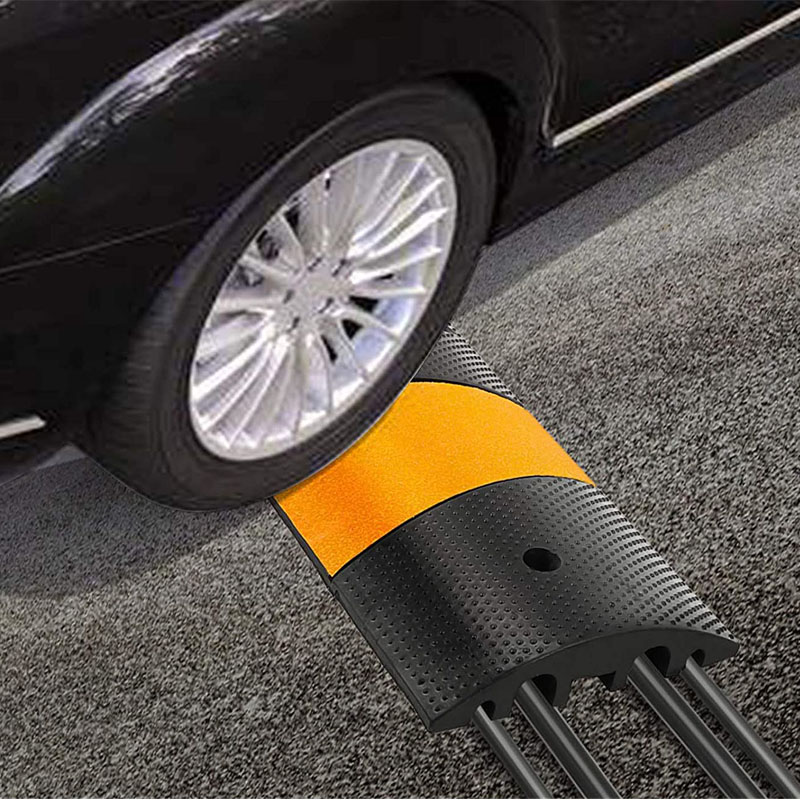
How to Choose a Speed Bump vs. a Speed Hump
Choosing between a speed bump and a speed hump is more than just a design choice—it’s a decision that directly affects traffic calming, pedestrian safety, and vehicle flow efficiency. Many facility managers, civil engineers, and property owners face the same question: which option works best for my environment? Understanding the difference between a speed bump and a speed hump, and how each contributes to parking lot safety, can make all the difference in designing an effective and long-lasting traffic management solution.
When considering the installation of a speed bump vs speed hump, it’s crucial to analyse the physical layout, the average vehicle speed, and the type of area where the traffic calming device will be placed. Both serve similar purposes—to reduce vehicle speed and improve pedestrian safety—but they function differently based on their profile, dimensions, and materials. Let’s explore how each structure adapts to various traffic environments, and how to choose the right product for your car park, residential street, or industrial site.
Functional profiles (bump vs hump)
At first glance, a speed bump and a speed hump may look alike, but their functional differences are significant. A speed bump is generally a higher and shorter structure, usually between 75mm to 100mm in height and 300mm to 600mm in length. It forces vehicles to slow down drastically, usually to 5–10 mph, before crossing. This sharp control is ideal for areas with heavy pedestrian movement, such as private car parks, school zones, and hospital entrances.
A speed hump, by contrast, is longer and more gradual, often stretching 3 to 4 metres in length. The design of a hump allows for moderate speed reduction—typically reducing vehicles to 15–20 mph. It’s suitable for public roads, residential neighbourhoods, and areas where a smoother driving experience is required. The hump provides traffic calming without abrupt stops, maintaining comfort while ensuring safety.
When comparing a speed bump vs speed hump, it’s essential to assess not only the speed reduction but also the overall traffic pattern. For instance, in a retail car park, drivers frequently enter and exit, often with pedestrians walking nearby. A speed bump helps create a safer environment by enforcing low speeds. In contrast, along a connecting road within a large industrial park, a speed hump offers a better balance between flow and control.
Speed environment mapping (mph → profile)
Matching the right traffic calming profile to the intended speed environment is key to effective design. The mapping between road speed limits and traffic calming profiles ensures that vehicles slow down without discomfort or damage.
For roads where the average speed is under 10 mph—like narrow driveways, gated communities, or internal factory lanes—a speed bump is the most efficient option. Its sharper incline enforces immediate speed reduction, making it suitable for high pedestrian zones and private premises. These are typical in environments prioritising parking lot safety over vehicle flow.
When traffic moves between 15 and 25 mph, a speed hump becomes the better choice. Its gentle rise and extended surface ensure that drivers reduce speed gradually, avoiding sudden braking. This design aligns with the goal of consistent traffic calming without creating congestion or frustration among drivers.
At 30 mph or above, neither bumps nor humps should be used directly. In such cases, local authorities might opt for raised tables or speed cushions—wider surfaces that allow for emergency vehicle passage and smoother deceleration. Understanding this speed-to-profile mapping is crucial when evaluating speed bump vs speed hump solutions, especially when the goal is to ensure both traffic calming and operational efficiency in large parking areas or residential estates.
Material options (rubber/plastic/asphalt)
Material choice plays a major role in the longevity and performance of any traffic calming system. The most common materials for speed bumps and humps are rubber, plastic, and asphalt, each offering unique advantages.
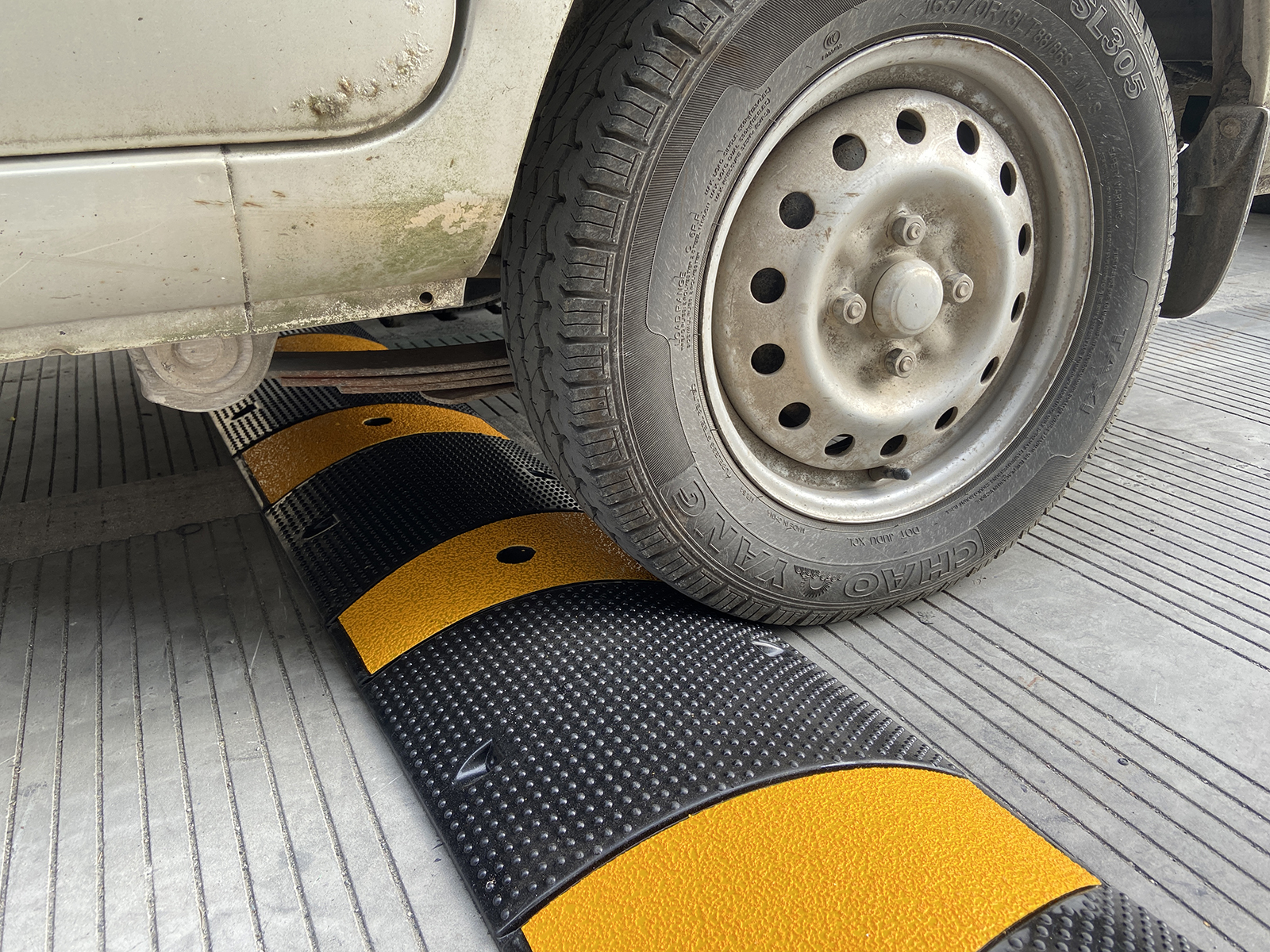
- Rubber speed bumps are modular, durable, and easy to install. They can be bolted directly onto asphalt or concrete surfaces and are often used in car parks or private roads where installation flexibility matters. Rubber products are also recyclable and provide excellent grip even in wet weather, improving parking lot safety.
- Plastic speed humps—typically made from high-density polyethylene (HDPE)—are lightweight, corrosion-resistant, and UV-stabilised. Their bright colours and reflective strips make them highly visible, enhancing night-time traffic calming. They’re particularly suited for temporary installations or locations that may require periodic relocation, such as event grounds or seasonal entrances.
- Asphalt humps, on the other hand, are permanent fixtures integrated into the road surface. They are ideal for municipal or long-term infrastructure projects, providing a seamless appearance and excellent load-bearing capacity. However, asphalt requires skilled installation and regular maintenance to prevent cracking, especially under heavy vehicles or in temperature-extreme climates.
When selecting between materials, consider the balance between durability, flexibility, and visual prominence. A rubber speed bump is often favoured in enclosed areas due to its quick deployment and strong slowing effect, while asphalt humps work better in community streets requiring smooth, long-term traffic calming. The right material also enhances compliance with local traffic regulations, further supporting safe and consistent vehicle flow.
Anchoring & maintenance
Proper anchoring ensures that speed bumps and humps remain securely in place despite daily vehicular impact. For modular rubber or plastic types, mechanical fixing using heavy-duty bolts and washers is the standard. These anchors can be easily removed during resurfacing or reconfiguration, making them a practical choice for commercial car parks and private facilities.
Concrete and asphalt installations require more permanent embedding, often involving compacted base layers and precise grading to avoid water accumulation. Poor anchoring can lead to shifting, loosening, or uneven surfaces, compromising both effectiveness and safety. Thus, ensuring a stable base is as important as the product itself.
Maintenance practices vary based on material. Rubber and plastic structures generally require only periodic cleaning and inspection of bolts. Asphalt versions need surface resealing and crack filling to maintain integrity. In high-traffic areas, reflective paints or embedded markers may need refreshing every few years to preserve visibility.
By implementing a consistent maintenance plan, property owners can prolong the lifespan of their traffic calming systems and maintain optimal parking lot safety. Selecting the right anchoring method not only reduces long-term repair costs but also enhances driver confidence and compliance.
Contact factory for bulk supply
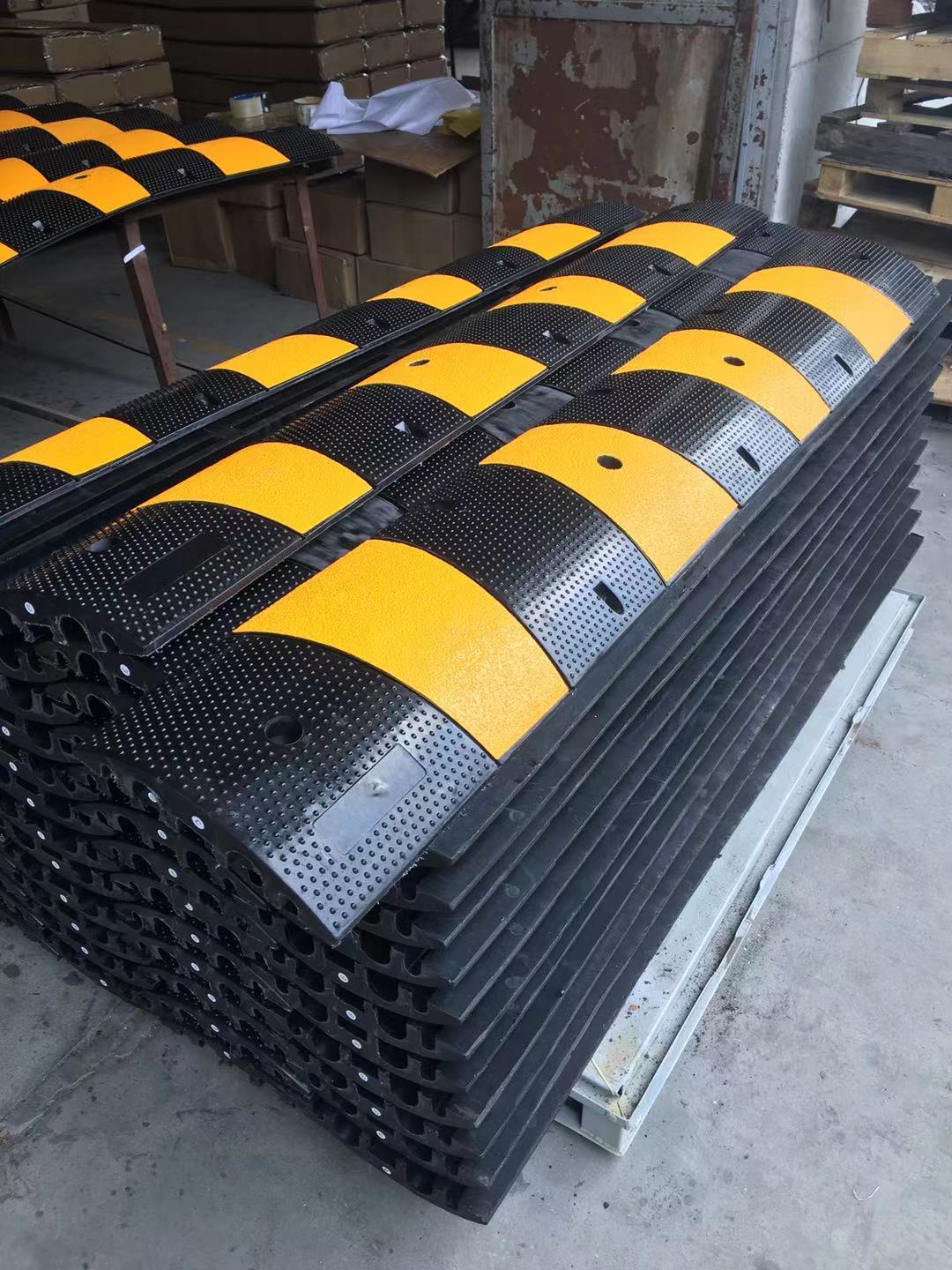
Whether you manage a commercial complex, residential estate, or industrial facility, sourcing high-quality speed bumps and humps directly from a trusted manufacturer ensures long-term value. Factories specialising in traffic calming products can provide tailored dimensions, materials, and reflectivity levels suited to each site’s requirements.
Bulk supply also means better cost efficiency and consistent product quality. By working directly with a professional factory, facility managers can request custom colour options, company logos, or specific anchoring systems, ensuring that every installation aligns with the overall site safety strategy.
If you are planning a large-scale traffic management project or upgrading your car park safety infrastructure, contact our factory for expert guidance and supply solutions. From modular rubber bumps to permanent asphalt humps, we offer durable and compliant products designed for maximum safety and efficiency in every environment.
FAQ
What is the main difference between a speed bump and a speed hump?
A speed bump is higher and shorter, creating a more abrupt speed reduction, while a speed hump is longer and smoother, allowing vehicles to maintain moderate speed without discomfort.
Where should I use speed bumps instead of speed humps?
Speed bumps are best suited for private car parks, gated communities, and loading areas where vehicles should slow to below 10 mph to enhance pedestrian and parking lot safety.
Are rubber speed bumps durable in outdoor environments?
Yes. Rubber speed bumps are resistant to UV exposure, moisture, and temperature changes. They are easy to install, replace, and maintain, making them an excellent choice for long-term outdoor use.
Can I install speed humps on a public road?
Yes, but this depends on local regulations. Most councils require specific height and spacing standards to maintain emergency vehicle access and overall traffic calming efficiency.
How often should I inspect or maintain installed bumps and humps?
Rubber or plastic models should be inspected at least twice a year, while asphalt humps may require annual resurfacing or repainting, especially in high-traffic areas.