 EN
EN

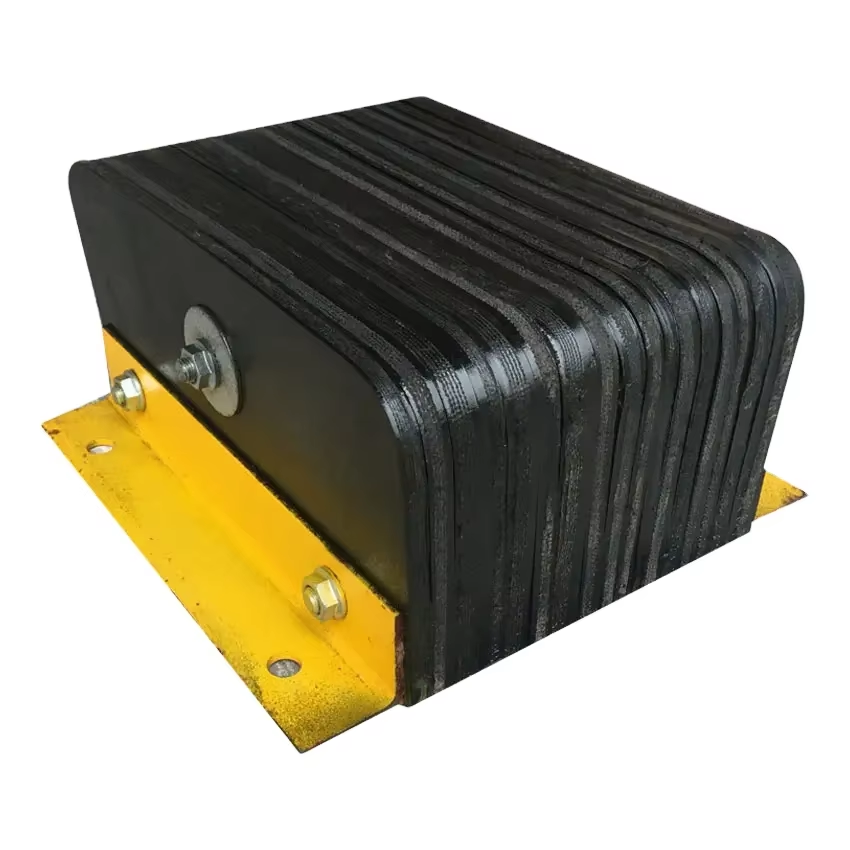
When it comes to protecting loading docks from the daily impact of truck traffic, laminated rubber dock bumpers have become the preferred solution for warehouse operators and logistics facility managers worldwide. These purpose-engineered components absorb the repeated shock loads generated when trailers back into dock faces, preventing costly structural damage and extending the operational life of both the dock and the vehicle. For facilities processing dozens or even hundreds of truck movements per day, the right bumper specification is not a minor purchasing decision — it is a core element of dock safety and infrastructure longevity.
What makes factory-supply laminated rubber dock bumpers particularly relevant today is the growing diversity of operating environments that procurement teams must account for. General-purpose warehouses, refrigerated distribution centers, cold-storage facilities, and outdoor loading areas in northern climates all impose very different physical demands on dock protection equipment. Understanding how laminated rubber dock bumpers are manufactured, what material and structural variables define their performance, and how factory-direct sourcing improves both product consistency and total procurement value is essential knowledge for any facility planner or operations manager evaluating dock infrastructure investments.
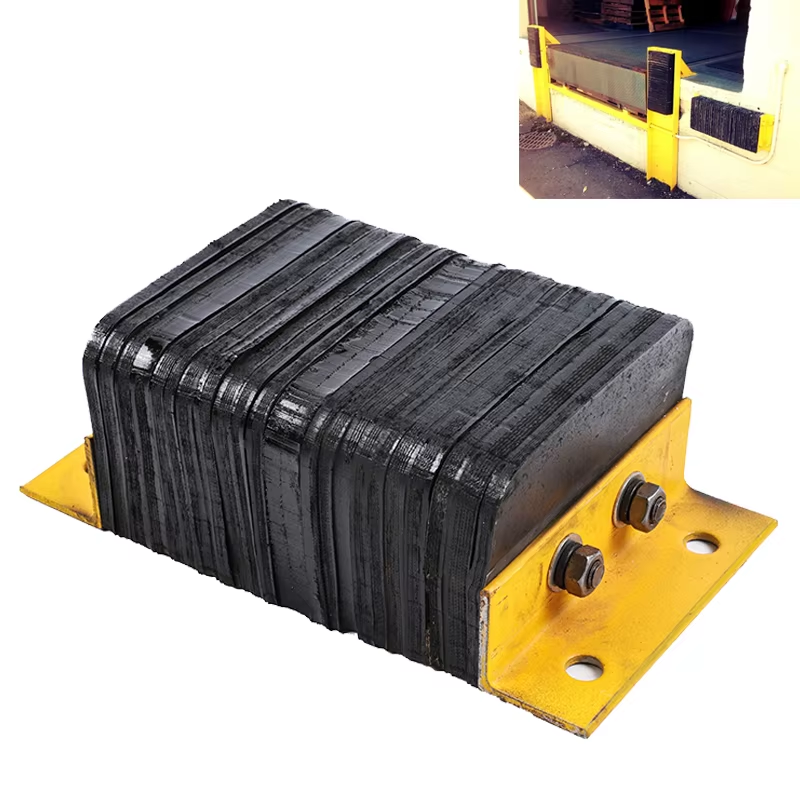
What Laminated Rubber Dock Bumpers Are and How They Are Constructed
The Core Architecture of a Laminated Bumper
Laminated rubber dock bumpers are built by bonding multiple layers of recycled or virgin rubber together under high pressure and controlled heat, creating a dense, multi-ply block that distributes impact forces across the entire cross-section rather than concentrating stress at a single point. Each rubber layer typically measures between 10 mm and 25 mm in thickness, and the total number of plies determines the bumper's overall height and energy absorption capacity. The lamination process fuses these layers into a unified structure that resists delamination even after tens of thousands of impact cycles.
The outer surface of laminated rubber dock bumpers is typically finished with a vulcanized skin that resists abrasion, UV exposure, and surface cracking. Mounting hardware — usually heavy-gauge steel backing plates and through-bolt arrangements — is integrated at the factory level, ensuring that the attachment points are aligned with the lamination structure rather than added as an afterthought. This integrated approach to construction is one reason why factory-supply laminated rubber dock bumpers consistently outperform field-assembled alternatives in long-term durability testing.
Material Selection and Its Effect on Performance
The rubber compound used in laminated rubber dock bumpers significantly influences how the product behaves under load, across temperature ranges, and over time. Natural rubber offers excellent elasticity and rebound characteristics, making it well suited to high-frequency impact environments. Styrene-butadiene rubber (SBR) blends are widely used in factory production because they provide a practical balance of cost efficiency, abrasion resistance, and durability under repeated compression. Neoprene and EPDM compounds are selected specifically when chemical resistance or extreme temperature stability is required.
Reputable factory suppliers of laminated rubber dock bumpers conduct compound testing at the material formulation stage, verifying Shore A hardness, compression set values, and tensile strength before any production run is approved. This upstream quality control is difficult to replicate when bumpers are sourced from distributors who have limited visibility into the actual manufacturing process. For procurement teams specifying laminated rubber dock bumpers for critical infrastructure, requesting material test reports directly from the factory is a straightforward step that validates the specification before equipment is installed.
Factory Supply Advantages for Warehouse Applications
Consistency Across Large-Volume Orders
Large warehouse complexes and distribution centers may require hundreds of laminated rubber dock bumpers installed across multiple dock doors, often in multiple dock configurations. When bumpers are sourced through intermediaries, dimensional tolerances and compound consistency can vary between production batches, creating situations where bumpers from different deliveries do not perform identically or do not fit the same mounting templates. Factory-direct supply eliminates this variability by ensuring that every unit in an order is produced to the same specification within the same controlled production environment.
Factory supply also enables customization that is impractical through distribution channels. Warehouse operators with non-standard dock face geometries, unusual trailer height ranges, or specific mounting bolt patterns can work directly with the factory to define bumper dimensions, ply count, and hardware configuration precisely. Laminated rubber dock bumpers produced to custom specifications typically require no on-site modification, reducing installation time and ensuring that the product performs as engineered from day one of service.
Lead Time Management and Procurement Efficiency
Facilities undergoing dock renovation or new construction frequently face tight installation schedules where delayed component delivery can cascade into broader project delays. Factory-supply arrangements for laminated rubber dock bumpers allow procurement teams to negotiate production scheduling directly, align delivery windows with installation phases, and maintain safety stock agreements for ongoing replacement requirements. This level of supply chain integration is not available through standard distribution models, where stock availability is subject to the distributor's own inventory cycles.
For warehouse networks operating across multiple sites, factory supply enables a single source-of-record for laminated rubber dock bumpers, simplifying vendor management, ensuring consistent product specifications across all locations, and creating a documented quality baseline that supports maintenance planning and warranty administration. The operational value of this consistency compounds over time as facility teams become familiar with a single product standard rather than managing a fragmented mix of bumper types from different sources.
Performance of Laminated Rubber Dock Bumpers in Cold Regions
Why Cold Temperatures Challenge Standard Dock Bumpers
Cold storage facilities and loading docks in northern or high-altitude climates expose dock equipment to temperatures that can drop well below freezing for extended periods. Standard rubber compounds used in low-cost dock bumpers often exhibit significant stiffening below -10°C, meaning that the energy absorption characteristics measured at ambient temperature no longer apply under actual cold-climate operating conditions. A bumper that absorbs impact effectively at 20°C may transmit dangerous shock loads to the dock structure when the rubber has hardened at -25°C, potentially causing cracking in the bumper itself and accelerated fatigue in the dock face materials.
Laminated rubber dock bumpers engineered for cold-region use incorporate compound formulations specifically selected for low-temperature flexibility. EPDM-based compounds maintain acceptable elasticity across a broad temperature range, while specialized SBR blends with adjusted plasticizer content can retain functional performance at temperatures that would render standard compounds brittle. When sourcing laminated rubber dock bumpers for cold-region warehouses or refrigerated distribution facilities, specifying low-temperature compound performance is as important as specifying physical dimensions and load rating.
Design Features That Improve Cold-Climate Durability
Beyond compound selection, the laminated construction itself contributes to cold-climate durability in ways that molded single-piece bumpers cannot match. The multi-ply structure of laminated rubber dock bumpers allows the bumper to flex across the full thickness of the block rather than concentrating strain at a single point, which reduces the risk of surface cracking when cold-hardened rubber is subjected to impact. Inter-layer adhesive systems used in quality factory production are formulated to maintain bond integrity across freeze-thaw cycling, preventing the delamination that can occur when moisture infiltrates adhesive interfaces and expands during freezing.
Steel backing plates used in cold-region laminated rubber dock bumpers are typically specified in hot-dip galvanized or stainless finishes to prevent the accelerated corrosion that occurs when de-icing salts contaminate dock areas in winter months. Mounting bolt designs that allow for thermal expansion and contraction without loosening are another factory-level detail that becomes operationally significant in facilities where temperature swings between dock interior and exterior environments can exceed 40°C within a single operating shift. These engineering details are most reliably incorporated when laminated rubber dock bumpers are specified directly with a factory that understands cold-region application requirements.
Sizing, Load Rating, and Specification Guidance
Matching Bumper Dimensions to Dock and Vehicle Profiles
The correct specification of laminated rubber dock bumpers begins with an accurate survey of the dock face geometry and the typical vehicle types that use each dock position. Standard dock bumpers are most commonly available in widths ranging from 100 mm to 300 mm and heights from 150 mm to 600 mm, with projection depths — the dimension that determines how far the bumper extends from the dock face and therefore how much energy it must absorb — typically ranging from 75 mm to 200 mm. These dimensions must correspond to the actual height range of trailer beds served by the dock and the lateral spacing between dock door frames.
Projection depth is the most operationally critical dimension for laminated rubber dock bumpers because it determines how much compression travel is available before the dock face contacts the trailer. Insufficient projection results in metal-to-metal contact that transfers unattenuated impact loads to the building structure, while excessive projection can interfere with dock leveler operation or create a trip hazard at dock level. Factory suppliers can assist procurement teams in mapping their dock configurations to available bumper profiles and can produce custom projection depths when standard dimensions do not match the facility's requirements.
Load Rating Considerations for High-Traffic Facilities
Laminated rubber dock bumpers for high-traffic warehouses must be rated not only for the peak impact load of a single truck backing event but also for the cumulative fatigue loading generated by continuous daily operations. A facility processing 200 truck movements per dock position per day is imposing a fundamentally different duty cycle than a facility processing 20 movements per day, and bumper specifications that are adequate for the lower-traffic scenario may fail prematurely under high-cycle conditions. Factory suppliers with structured product testing programs can provide compression fatigue data that allows facility engineers to project expected service life under realistic operating conditions.
For facilities operating refrigerated or frozen storage areas, the load rating of laminated rubber dock bumpers should be verified at the lowest expected operating temperature rather than at ambient conditions. Some factory suppliers provide temperature-adjusted load ratings that give facility operators a more accurate picture of real-world performance, which is particularly valuable for cold-region applications where temperature-dependent stiffening could significantly alter the effective impact absorption characteristics of the installed bumper population.
Installation, Maintenance, and Service Life Expectations
Correct Installation Practices for Maximum Performance
The performance of laminated rubber dock bumpers in service is directly influenced by the quality of the initial installation. Bumpers must be mounted to a structurally sound dock face using anchor bolts of appropriate diameter and embedment depth for the expected impact loads. Factory-supplied mounting hardware templates simplify the marking and drilling process and ensure that bolt patterns align correctly with the bumper's internal backing plate, preventing stress concentration that can cause premature cracking around the mounting holes.
Surface preparation before installation — including removal of existing damaged bumpers, grinding of protruding weld beads or anchor remnants, and application of sealant around mounting penetrations — is as important as the bumper selection itself. Moisture infiltration behind an installed laminated rubber dock bumper can accelerate backing plate corrosion and degrade the adhesion between the bumper and the mounting surface over time, reducing both the mechanical integrity of the installation and the effective service life of the bumper assembly.
Inspection Intervals and Replacement Criteria
Laminated rubber dock bumpers in high-traffic facilities should be included in regular dock inspection programs, with visual checks at monthly intervals and more detailed physical inspections at six-month intervals. Key replacement indicators include surface cracking that extends more than 5 mm in depth, visible delamination between rubber plies, permanent compression set that has reduced the bumper's projection depth by more than 30% of its original dimension, and any loosening of the mounting hardware that cannot be corrected by re-torquing the anchor bolts.
When replacement is needed, factory-supply arrangements that include a standing purchase order for laminated rubber dock bumpers allow maintenance teams to execute replacements promptly without re-entering a sourcing and qualification cycle. Proactive replacement of worn bumpers before they reach complete failure protects the dock face structure from impact damage and avoids the more significant repair costs associated with cracked dock faces, damaged dock leveler frames, or trailer damage that can occur when bumpers are left in service past their effective life.
FAQ
What makes laminated rubber dock bumpers more durable than molded single-piece bumpers?
Laminated rubber dock bumpers distribute impact energy across multiple bonded rubber plies, which allows the entire cross-section of the bumper to participate in load absorption rather than concentrating strain at a single point. This multi-layer structure also makes them more resistant to surface cracking under repeated compression and provides a degree of redundancy — if one layer develops minor surface damage, the remaining plies continue to function correctly. Single-piece molded bumpers typically concentrate stress at the base of the profile, which is where cracking and structural failure most commonly initiate.
Are laminated rubber dock bumpers suitable for use in freezing temperatures?
Laminated rubber dock bumpers can be manufactured specifically for cold-region and cold-storage applications by selecting rubber compounds — such as EPDM or specially formulated SBR blends — that retain flexibility and impact absorption at temperatures well below freezing. Standard compound formulations may not maintain adequate elasticity at -20°C or lower, so it is important to specify low-temperature performance requirements when sourcing laminated rubber dock bumpers for refrigerated facilities or facilities in cold climates. A factory supplier can provide compound test data confirming performance across the required temperature range.
How do I determine the correct projection depth for laminated rubber dock bumpers at my facility?
Projection depth should be determined by measuring the gap between the dock face and the face of a properly positioned trailer at the dock, accounting for the vertical range of trailer bed heights that the dock serves. The bumper's projection must be sufficient to absorb the kinetic energy of a backing truck before metal-to-metal contact occurs, but it must not extend so far that it interferes with dock leveler deployment or creates a safety hazard. Most factory suppliers offer application engineering support to help facility teams select the appropriate projection depth based on their specific dock configuration and vehicle mix.
What should I request from a factory supplier to verify the quality of laminated rubber dock bumpers before placing a large order?
Before committing to a large procurement of laminated rubber dock bumpers, request material test reports confirming rubber compound specifications including Shore A hardness, tensile strength, elongation at break, and compression set values. Ask for production samples from the actual compound batch to be used in your order so that dimensional and hardness verification can be performed independently. For cold-region applications, request low-temperature flexibility test data. Additionally, ask the factory to confirm that inter-layer adhesive systems and backing plate coatings meet the environmental conditions of your intended installation, particularly if the dock environment involves chemical exposure, extreme temperature cycling, or high-humidity conditions.
Table of Contents
- What Laminated Rubber Dock Bumpers Are and How They Are Constructed
- Factory Supply Advantages for Warehouse Applications
- Performance of Laminated Rubber Dock Bumpers in Cold Regions
- Sizing, Load Rating, and Specification Guidance
- Installation, Maintenance, and Service Life Expectations
-
FAQ
- What makes laminated rubber dock bumpers more durable than molded single-piece bumpers?
- Are laminated rubber dock bumpers suitable for use in freezing temperatures?
- How do I determine the correct projection depth for laminated rubber dock bumpers at my facility?
- What should I request from a factory supplier to verify the quality of laminated rubber dock bumpers before placing a large order?