 EN
EN

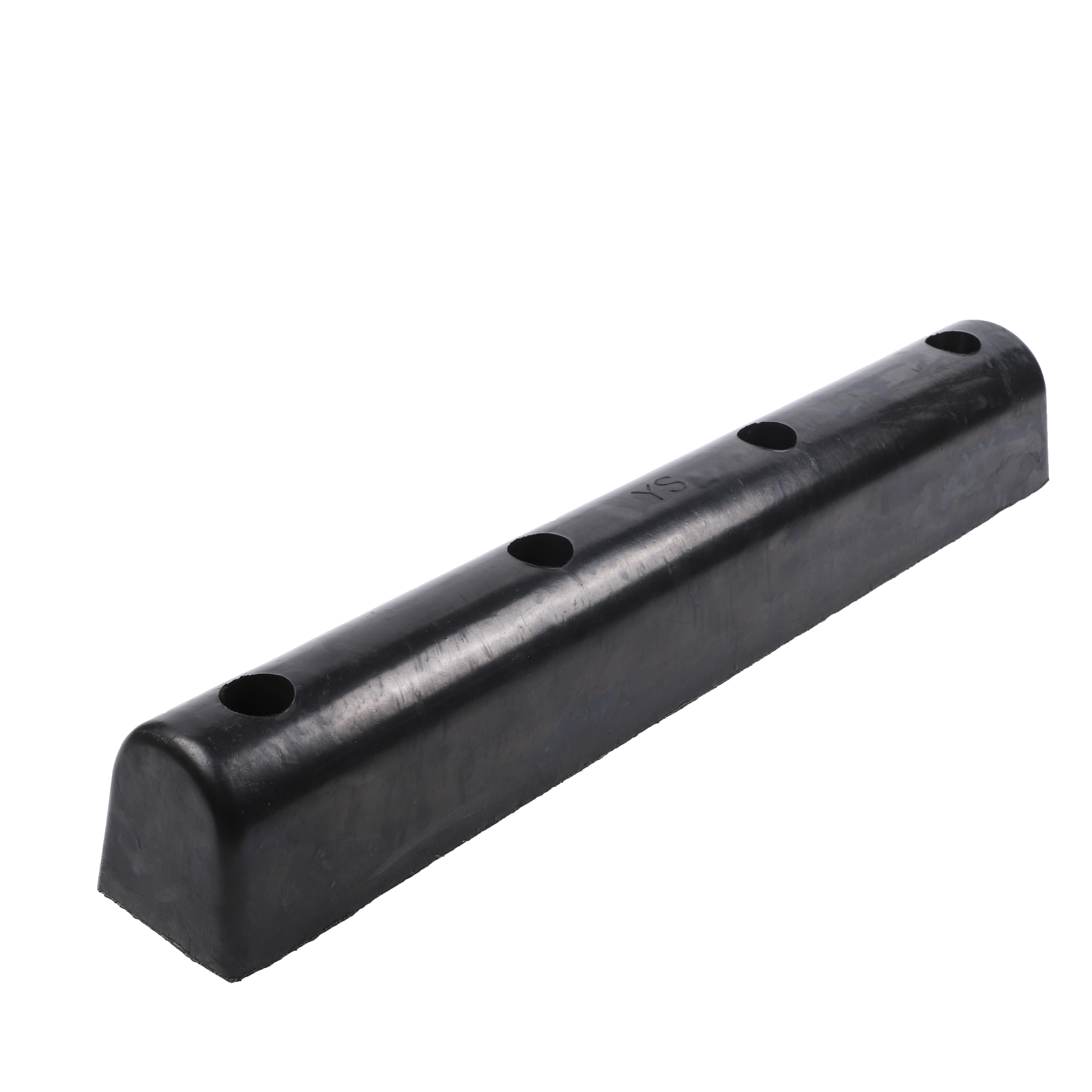
When a vessel approaches a dock, pier, or another boat, the forces involved can be surprisingly powerful. Even at low speeds, the mass of a vessel creates enough momentum to cause serious damage to both the hull and the berthing structure. A properly selected marine fender acts as the critical buffer between these two surfaces, absorbing kinetic energy and distributing impact loads before they cause costly structural harm. Understanding the different types available is the first step toward making an informed decision for any marine or port application.
The global marine and dock industry relies on a wide spectrum of marine fender designs, each engineered to handle specific load conditions, vessel types, and berthing geometries. From small recreational boat fenders used along private docks to large cylindrical and arch fenders deployed at commercial ports, the variety is extensive. This article breaks down the main categories of marine fender systems, explains how each type functions, and helps you identify which design best fits your operational requirements.
The Core Function of a Marine Fender System
Energy Absorption and Load Distribution
The primary job of any marine fender is to absorb the kinetic energy of a berthing vessel and distribute the resulting reaction force across as wide an area as possible. When energy is absorbed efficiently, hull pressure drops and neither the vessel nor the dock structure experiences localized stress concentrations that could lead to cracking or deformation. The geometry and material composition of a marine fender directly determine how much energy it can absorb and how high the reaction force will be during compression.
A key performance indicator for any marine fender is the ratio between energy absorption and reaction force. Designers aim to maximize energy absorption while keeping reaction force within the limits the vessel hull and dock structure can safely tolerate. Rubber is the dominant material used across most marine fender types because its elastic properties allow repeated compression and recovery without significant degradation over time.
Secondary functions include preventing abrasion between the hull and dock surface, protecting dock piles and fender panels from direct impact, and providing a degree of angular flexibility when vessels berth at non-perpendicular angles. A well-specified marine fender system addresses all three of these functions simultaneously.
Material Considerations Across Fender Types
Rubber remains the industry standard material for marine fender products due to its outstanding resilience, UV resistance, and ability to maintain elastic performance across a wide temperature range. Both natural rubber and synthetic rubber compounds are used depending on the application environment. High-oil-resistance compounds are specified where fuel or lubricant exposure is expected, while low-temperature formulations are chosen for arctic or cold-water deployments.
Foam-filled polyethylene fenders offer an alternative for smaller vessels and recreational docking situations. These products combine a closed-cell foam core with a tough outer skin, making them virtually unsinkable and maintenance-free. While they do not match the energy absorption capacity of large rubber marine fender systems, they provide excellent practical performance for lightweight berthing scenarios where simplicity and durability matter most.
Cylindrical and D-Type Fenders
Cylindrical Marine Fenders
Cylindrical fenders are among the most widely produced and utilized marine fender designs in the world. Their hollow tubular cross-section allows the rubber wall to deform under compression, absorbing energy progressively as deflection increases. They can be mounted horizontally along dock faces, suspended vertically from pier edges, or used as tug boat fenders wrapped around the bow of assist vessels.
The performance of a cylindrical marine fender scales with its diameter and wall thickness. Larger diameters provide more energy absorption but also generate higher reaction forces. For small craft marinas and recreational docking facilities, medium-diameter cylindrical fenders strike an effective balance between performance and cost. For commercial ferry terminals and workboat docks, heavier-walled and larger-diameter versions are preferred.
One of the practical advantages of cylindrical fenders is their versatility in mounting configurations. They can be threaded onto chains, bolted through center bore mounting brackets, or simply lashed to dock cleats. This flexibility makes them a default choice in many new dock installations and retrofit projects where custom solutions are not cost-justified.
D-Type Marine Fenders
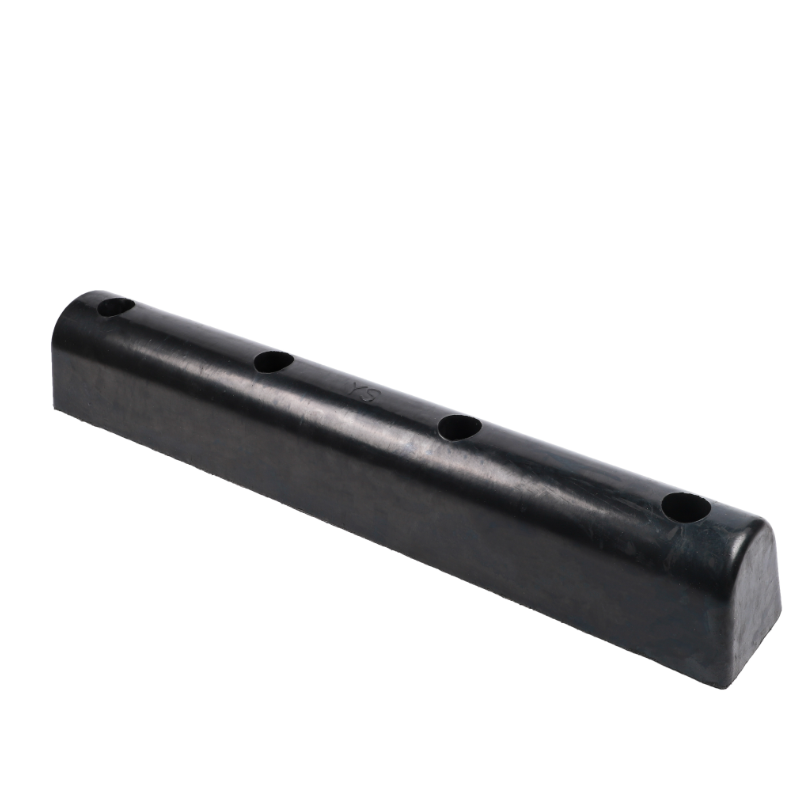
The D-type marine fender takes its name from its cross-sectional shape, which resembles the letter D. A flat rear face bonds directly to the dock structure or fender panel, while the curved front face contacts the vessel hull. This design makes installation straightforward and ensures the fender maintains consistent contact geometry regardless of minor angular variations in the vessel's approach.
D-fenders are produced in a wide range of sizes, from small profiles used on floating pontoons and finger piers to large sections deployed on commercial quaysides. The solid rubber construction of a D-type marine fender means it can sustain higher compression ratios without the risk of catastrophic collapse that hollow profiles can occasionally experience under severe overload conditions.
For dock operators looking for a dependable, low-maintenance marine fender solution that installs quickly along continuous dock faces, the D-type profile remains one of the most practical choices available. Its straightforward geometry also simplifies replacement when individual sections reach the end of their service life.
Arch, Wing, and Cone Fenders
Arch Fenders for Mid-Range Applications
Arch fenders feature a curved, arch-shaped cross-section that provides a favorable energy-to-reaction-force ratio compared to simple cylindrical designs. The arch geometry allows the rubber to buckle predictably under load, spreading deformation across the full structure rather than concentrating stress at a single point. This behavior gives arch fenders a relatively soft initial response followed by progressive stiffening as compression increases.
This load-deflection characteristic makes the arch marine fender particularly suitable for vessel types with sensitive hull forms, such as aluminum-hulled workboats or fiberglass pleasure craft. The lower peak reaction force compared to equivalent cylindrical fenders reduces the risk of hull indentation or localized paint damage during repeated berthing operations.
Arch fenders are typically bolt-mounted through their flat base onto dock face boards or steel fender panels. Their moderate profile height also makes them a good fit for floating dock systems where the fender must not interfere with boarding access or deck-level equipment.
Wing and Cone Fenders
Wing fenders, sometimes called cell fenders in certain configurations, are designed with extended flanges that allow the structure to deflect more freely during angular contact. This makes the wing marine fender especially well-suited for berths where vessels approach at oblique angles or where tidal variation causes the vessel to make contact at different heights on the dock face across the tidal cycle.
Cone fenders, by contrast, are engineered for very high energy absorption and are commonly specified for large commercial ports handling bulk carriers, tankers, and container vessels. The conical rubber body compresses axially under load, generating a consistent and predictable reaction force curve. A cone marine fender installation typically incorporates a frontal panel with an ultra-high-molecular-weight polyethylene face pad that reduces friction between the vessel hull and the fender system.
Both wing and cone marine fender types represent a step up in engineering complexity and cost compared to cylindrical and D-type designs. They are generally specified by port engineers and marine consultants for permanent infrastructure projects where vessel size, berthing velocity, and acceptable hull pressure are calculated with precision.
Foam and Pneumatic Fenders
Foam-Filled Fenders for Versatile Use
Foam-filled fenders consist of a closed-cell polyethylene foam core encased in a tough polyurethane or nylon-reinforced outer skin. Unlike hollow rubber designs, foam fenders cannot lose their buoyancy or deflate if the outer skin is punctured, which makes them highly valued in ship-to-ship transfer operations and offshore floating production environments. A foam marine fender maintains its protective function even after surface damage, which reduces operational risk in demanding offshore conditions.
Their floating nature means foam fenders can be deployed freely between vessels without permanent dock mounting hardware. This portability makes them popular for ship-to-ship operations, temporary mooring situations, and military vessel protection applications. The cylindrical foam marine fender with rope net covering is a particularly common configuration in offshore and naval service.
For smaller craft and recreational marinas, smaller foam fenders provide excellent protection without the maintenance requirements of inflatable designs. They resist UV degradation, petroleum products, and saltwater corrosion effectively, making them a durable long-term investment for exposed marine environments.
Pneumatic Fenders
Pneumatic fenders are inflatable rubber cylinders used primarily for ship-to-ship berthing, tanker lightering, and large vessel mooring operations. The compressed air or nitrogen fill provides a compliant, low-reaction-force buffer even at very high energy levels, which is critical when protecting the sensitive hull plating of large vessels. A pneumatic marine fender can absorb enormous amounts of kinetic energy while keeping hull contact pressure well within acceptable limits.
The internal pressure of a pneumatic marine fender is carefully specified based on vessel displacement and berthing velocity calculations. Higher inflation pressure increases energy absorption capacity but also raises reaction force. Regular inspection and pressure monitoring are essential maintenance tasks for pneumatic systems to ensure consistent performance over time.
Pneumatic fenders are also widely used as temporary protection during dry-dock entry procedures and as standby protection during port construction or repair works. Their large physical size and relatively straightforward deployment make them a flexible tool in the port operator's asset inventory when permanent fender systems are unavailable or undergoing maintenance.
Choosing the Right Marine Fender for Your Application
Matching Fender Type to Vessel and Dock Conditions
Selecting the correct marine fender begins with a clear understanding of the vessels that will use the berth. Vessel displacement, hull form, maximum berthing velocity, and approach angle are the primary engineering inputs. A small recreational marina serving fiberglass sailboats has completely different requirements compared to a commercial quay handling steel-hulled cargo vessels, and specifying the wrong marine fender type can lead to either inadequate protection or unnecessarily high procurement costs.
Tidal range is another factor that significantly influences marine fender selection. In ports with large tidal variations, the fender system must maintain effective contact with the vessel hull across the full range of water levels. Designs that concentrate contact at a single height point may perform well at one tide state but fail to protect effectively at other levels. Arch and wing-type fenders generally handle vertical load variation better than simple D-type profiles in high-tidal-range environments.
Environmental conditions including UV exposure, chemical contamination, extreme temperatures, and wave action should also be factored into material selection. A marine fender specified for a tropical port with high UV levels and warm water will require different rubber compound formulations compared to one deployed in a northern European harbor subject to freeze-thaw cycles and storm surge loadings.
Installation and Maintenance Considerations
The long-term performance of a marine fender system depends as much on correct installation and routine maintenance as it does on initial product selection. Rubber fenders should be inspected regularly for surface cracking, delamination, and abnormal wear patterns that may indicate misalignment or overloading. Fastener integrity must also be checked because loose mounting hardware can cause the fender to shift position and reduce its effectiveness during berthing events.
For foam and pneumatic marine fender types, the outer skin condition is a critical maintenance focus. Cuts, abrasions, and punctures should be repaired promptly to prevent water ingress into foam cores and to maintain the structural integrity of pneumatic fenders. Rope net coverings on pneumatic and foam designs should be checked for strand breakage and retied or replaced as needed to prevent the rope network from cutting into the outer skin under repeated compression loads.
Documenting berthing events and noting any unusual fender behavior provides valuable data for maintenance scheduling and eventual replacement planning. A well-maintained marine fender system will routinely provide ten to twenty years of effective service in most commercial and recreational applications, making proactive maintenance a sound long-term investment.
FAQ
What is the difference between a marine fender and a dock bumper?
The terms are often used interchangeably for smaller applications, but technically a marine fender refers to any device designed to absorb berthing energy and protect vessels and dock structures, while a dock bumper typically describes a simpler, lighter-duty protective strip or pad attached to fixed dock edges. In commercial port engineering, 'marine fender' refers to engineered rubber or pneumatic systems with defined energy absorption specifications, whereas dock bumpers are more commonly associated with light recreational use.
How do I know what size marine fender I need?
Sizing a marine fender correctly requires knowing your vessel's displacement tonnage, maximum berthing velocity, and the geometry of your berth. For recreational boats, manufacturer guidelines based on vessel length provide a practical starting point. For commercial and workboat applications, formal berthing energy calculations using standard marine engineering formulas are recommended to ensure the selected fender absorbs sufficient energy without generating reaction forces that exceed hull or dock structure limits.
Can a marine fender be used for both dock and ship-to-ship applications?
Some marine fender types, particularly foam-filled cylindrical designs and pneumatic fenders, are well suited to both dock berthing and ship-to-ship use because they are buoyant and do not require fixed mounting. Traditional rubber profiles such as D-type and arch fenders are designed for fixed installation on dock structures and are not typically used for ship-to-ship operations. Selecting the right type depends on whether the fender needs to float freely between vessels or remain permanently attached to a fixed structure.
How long does a marine fender typically last?
A quality rubber marine fender in a well-maintained installation can last between ten and twenty years or more depending on load frequency, environmental conditions, and the quality of the rubber compound used. Foam-filled fenders generally have similar lifespans if the outer skin remains intact. Pneumatic fenders in active service may require more frequent inspection and skin repairs due to the abrasion involved in ship-to-ship and offshore deployment. Regular maintenance and prompt repair of visible damage are the most effective ways to extend marine fender service life.