 EN
EN

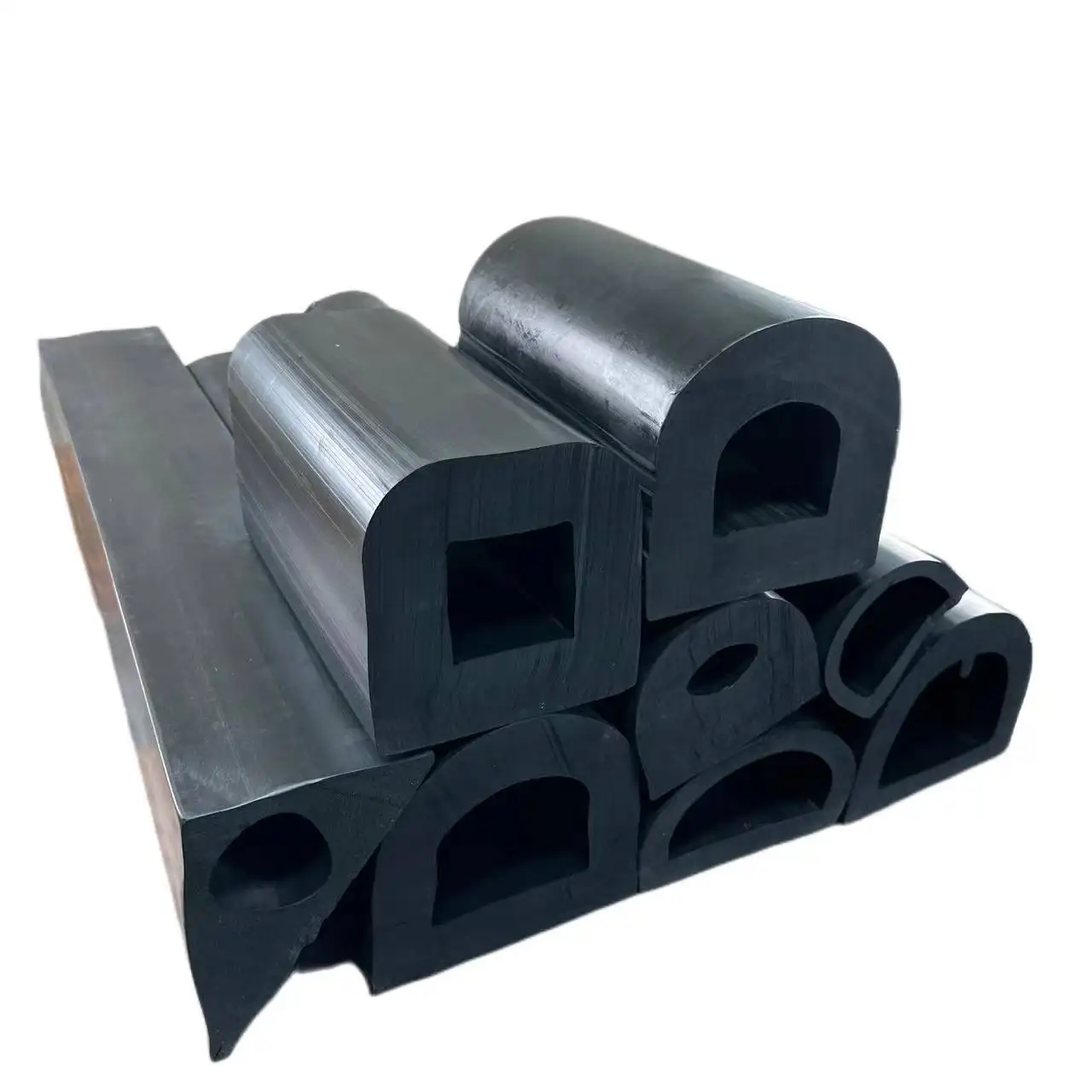
When it comes to protecting vessels, docks, and port infrastructure, rubber marine fenders are one of the most critical components in any berthing system. These purpose-engineered buffers absorb the kinetic energy of vessels during docking, preventing costly structural damage to both the ship hull and the quayside. As global maritime trade continues to expand, the demand for reliable, factory-supplied rubber marine fenders with customizable specifications has grown significantly among port operators, shipyards, and offshore facility managers.
Factory supply of rubber marine fenders offers procurement teams a distinct advantage: the ability to specify exact profiles, mounting configurations, and material formulations from the production stage rather than adapting off-the-shelf products after the fact. This article explores how factory-direct rubber marine fenders are manufactured with custom profiles, precision mounting holes, and robust weather resistance to meet the rigorous demands of marine environments worldwide. Understanding these capabilities helps buyers make informed decisions when sourcing rubber marine fenders for new installations or replacement projects.
What Factory Supply Means for Rubber Marine Fenders
Direct Manufacturing Access and Specification Control
Factory supply refers to procuring rubber marine fenders directly from the manufacturing source rather than through multiple layers of distribution. This direct relationship gives buyers control over material grades, dimensional tolerances, and performance parameters from the earliest stage of production. For large-scale port projects or vessel fleets requiring consistent fender performance across many installation points, this level of control is not a luxury — it is a necessity.
When sourcing rubber marine fenders through factory channels, procurement engineers can review compound formulations, request prototype samples, and conduct load testing before committing to full production runs. This process reduces the risk of receiving products that fail to meet site-specific energy absorption or deflection requirements. It also shortens the feedback loop between design intent and delivered product, which is especially valuable for non-standard applications.
Factory-level supply relationships also support better traceability. Each batch of rubber marine fenders can be accompanied by production records, material certificates, and test reports that confirm compliance with relevant standards such as PIANC guidelines or ISO specifications. This documentation is increasingly required by port authorities and classification societies during project audits.
Minimum Order Quantities and Lead Time Planning
Factory supply of rubber marine fenders typically involves negotiated minimum order quantities that reflect the economics of rubber compounding and vulcanization tooling. Understanding these minimums helps project planners align procurement timelines with construction or dry-dock schedules. For large port expansions, ordering rubber marine fenders in production batches often reduces per-unit cost significantly compared to ad hoc procurement.
Lead times for custom rubber marine fenders depend on profile complexity, mold availability, and current production schedules. Standard cylindrical and D-profile fenders typically carry shorter lead times because tooling is already in place. Highly customized profiles or large-format arch fenders may require new mold fabrication, which adds weeks to the timeline. Early engagement with the factory during the design phase is the most effective way to manage this variable.
Custom Profile Options for Rubber Marine Fenders
Standard Profiles and Their Applications
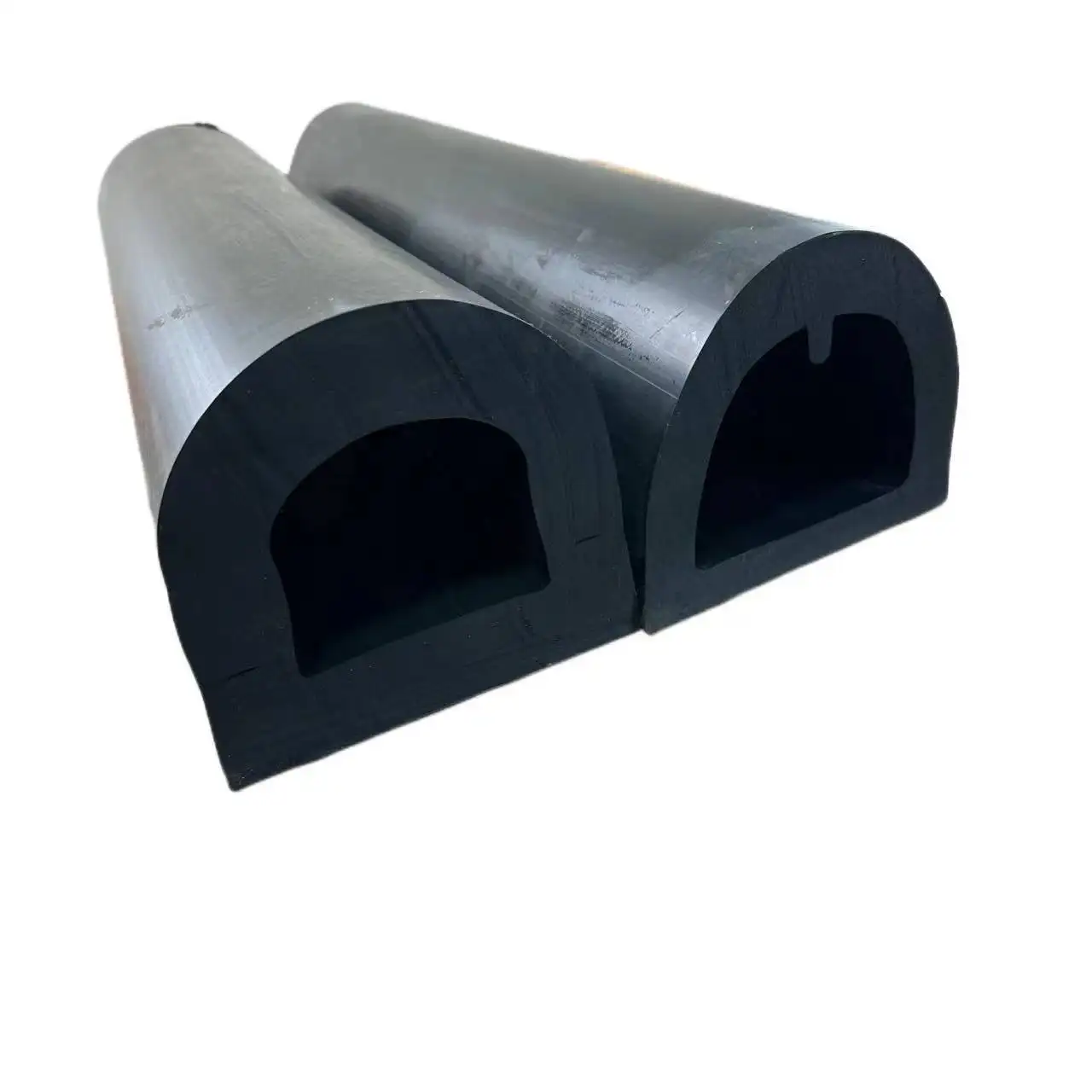
Rubber marine fenders are available in a wide range of established profiles, each suited to different berthing energy levels, vessel types, and dock geometries. The D-profile, also known as the D-fender or half-round fender, is among the most widely used because of its combination of moderate energy absorption, low reaction force, and simple bolt-on installation. It is commonly applied to smaller craft, pontoons, tugboats, and recreational marina structures.
Cylindrical rubber marine fenders are favored in applications requiring high energy absorption with a compact cross-section. They can be hung vertically or horizontally and are frequently used at ferry terminals, offshore supply vessel berths, and bulk cargo quays. Square and rectangular profile fenders are preferred where surface contact area needs to be maximized to reduce hull pressure, particularly for vessels with flat-bottom or barge-type hulls.
Arch fenders represent a more advanced profile category. Their hollow back design allows for progressive compression behavior, meaning the reaction force builds gradually as the fender deflects. This characteristic makes arch-profile rubber marine fenders well suited to larger vessels where controlled load transfer to the dock structure is critical. Factories supplying arch fenders must maintain precise internal cavity dimensions to ensure consistent performance batch to batch.
Custom Profile Engineering for Non-Standard Requirements
Many port and shipyard applications fall outside the dimensional range of standard profiles. In these cases, factory supply of rubber marine fenders involves custom profile engineering, where the fender cross-section is designed from scratch based on the buyer's energy absorption targets, available mounting space, and acceptable reaction force limits. This process typically begins with a performance brief rather than a dimensional drawing.
Custom profiles may incorporate compound curves, asymmetric cross-sections, or integrated mounting flanges that would be impractical to achieve by modifying standard products. The factory's tooling and molding capabilities determine how complex a profile can be produced economically. Advanced manufacturers can produce rubber marine fenders with co-extruded or co-molded sections that combine different rubber durometers in a single profile, enabling tuned stiffness gradients across the fender body.
When custom profiles are developed for rubber marine fenders, prototype testing is a recommended step before full production approval. Physical compression testing of prototype sections confirms that the predicted load-deflection curve matches actual behavior. Any discrepancy between modeled and measured performance can be addressed through minor geometry adjustments before production tooling is finalized, saving considerable cost downstream.
Mounting Holes and Hardware Integration in Rubber Marine Fenders
Bolt Hole Patterns and Dimensional Standards
The mounting hole pattern is one of the most practically important customization options when ordering rubber marine fenders from a factory. Hole spacing, diameter, and depth must align precisely with the existing or planned bolt-down pattern on the dock face, pontoon rail, or hull mounting strip. Mismatches in hole pattern require on-site drilling or shimming, which adds labor cost and can compromise the structural integrity of the installation.
Factory-drilled mounting holes in rubber marine fenders are typically specified by center-to-center spacing, hole diameter, and whether through-holes or blind holes are required. For D-profile and rectangular fenders, a standard pitch of 200mm to 500mm between holes is common, but this varies widely by application. Factories can accommodate nearly any pitch within the practical limits of the fender's cross-section dimensions and rubber thickness at the mounting zone.
Bolt hole diameter must account for the fastener size plus adequate rubber compression around the hole perimeter. Under-sized holes create installation difficulty and risk tearing the rubber during bolt insertion. Over-sized holes reduce clamping surface area and may allow water ingress around the fastener. Experienced factory suppliers will recommend hole-to-bolt clearance tolerances based on the rubber compound's hardness and the expected dynamic load conditions during service.
Embedded Hardware and Metal Insert Options
For applications where rubber marine fenders must resist high pullout forces or where repeated removal and reinstallation is anticipated, embedded metal inserts offer a significant advantage over plain bolt-through holes. These inserts — typically stainless steel or galvanized steel threaded bushings — are vulcanized into the rubber body during molding, providing a hard-faced bearing surface that maintains consistent thread engagement across many installation cycles.
Metal inserts are particularly valuable in rubber marine fenders used on workboats, ferries, or naval vessels where fenders are removed during voyages and reinstalled at each berth. Without inserts, repeated bolting and unbolting gradually deforms the rubber around the hole, eventually requiring fender replacement even if the rubber body itself remains serviceable. Insert-equipped fenders extend service life considerably in these high-cycle applications.
Some factory-supplied rubber marine fenders also incorporate steel backing plates or UHMW-PE (ultra-high molecular weight polyethylene) face plates as standard integrated components. These additions protect the rubber from abrasive hull surfaces and reduce the friction coefficient between fender and vessel hull. Specifying these options at the factory level ensures they are properly bonded or mechanically integrated rather than added as a field modification.
Weather Resistance in Factory-Grade Rubber Marine Fenders
Rubber Compound Selection for Marine Exposure
The performance longevity of rubber marine fenders is fundamentally determined by the compound formulation used during manufacturing. Marine environments expose fenders to ultraviolet radiation, ozone, salt water, fuel and oil contamination, extreme temperature cycling, and biological fouling. The rubber compound must resist all of these degradation mechanisms simultaneously over a service life that may span a decade or more.
Natural rubber (NR) offers excellent mechanical properties including high tear strength and fatigue resistance, making it a strong baseline for rubber marine fenders in mechanically demanding applications. However, natural rubber has limited resistance to ozone cracking and oil contamination. Neoprene (CR) compounds improve ozone and oil resistance significantly while retaining good mechanical properties, making neoprene-based rubber marine fenders a popular choice for exposed coastal and offshore installations.
EPDM (ethylene propylene diene monomer) rubber offers the highest weather and ozone resistance of commonly used marine compounds. Rubber marine fenders based on EPDM formulations are specified for tropical and high-UV environments where surface crazing and cracking are primary failure modes. Compound selection should always be aligned with the actual environmental conditions at the installation site, and factory suppliers should be able to provide compound data sheets confirming the relevant resistance characteristics.
Surface Treatments and Long-Term Durability
Beyond compound selection, surface treatments applied during or after vulcanization contribute to the weather resistance of rubber marine fenders. Surface halogenation, for example, creates a chemically modified outer layer that resists adhesion of marine fouling organisms and improves compatibility with protective coatings. This treatment is particularly relevant for rubber marine fenders installed in tropical port environments where biological growth can accelerate surface deterioration.
Anti-ozone waxes are another surface protection mechanism integrated into many rubber marine fender compounds. These waxes migrate to the surface during and after vulcanization, forming a thin protective film that physically blocks ozone from reaching the rubber matrix. While not permanent, the wax bloom replenishes itself as the fender flexes in service, providing ongoing protection in high-ozone coastal atmospheres.
Color stability is a secondary but commercially relevant aspect of weather resistance for rubber marine fenders. Black carbon-filled compounds offer the best UV stability, which is why the majority of rubber marine fenders are supplied in black. When colored fenders are specified for aesthetic or identification purposes, additional UV stabilizers must be incorporated into the compound to prevent rapid surface chalking and color fading. Factories experienced in marine fender production will routinely offer accelerated weathering test data for colored compound options.
Quality Assurance and Compliance for Factory-Supplied Rubber Marine Fenders
Testing Protocols and Performance Certification
Factory-supplied rubber marine fenders destined for commercial port applications are expected to comply with recognized performance standards. The PIANC (World Association for Waterborne Transport Infrastructure) guidelines provide the most widely referenced framework for fender system design, including energy absorption and reaction force requirements at specified deflection levels. Compliance with these guidelines is typically demonstrated through physical compression testing of production samples.
Testing protocols for rubber marine fenders generally include static compression tests to measure load-deflection behavior, angular and shear load tests to simulate off-center vessel contact, and low-temperature flexibility tests for installations in cold climates. Factories with dedicated testing infrastructure can conduct these tests in-house and provide test certificates with each shipment. Where third-party certification is required, independent testing can be arranged through accredited laboratories.
Physical property testing of the rubber compound — including hardness, tensile strength, elongation at break, compression set, and heat aging resistance — provides the secondary layer of quality assurance. These properties confirm that the rubber used in production rubber marine fenders meets the compound specification agreed during order placement. Buyers should request compound test reports as part of the standard delivery documentation package.
Factory Audit Capabilities and Long-Term Supply Partnerships
For high-volume or long-term procurement programs, factory audits provide buyers with direct visibility into manufacturing capabilities, quality management systems, and production capacity for rubber marine fenders. Audits typically review raw material sourcing, mixing and compounding procedures, vulcanization press calibration, dimensional inspection methods, and finished goods handling. Factories with ISO 9001 certification provide a baseline quality management framework, though marine-specific quality requirements may go beyond the standard audit criteria.
Long-term supply partnerships for rubber marine fenders offer advantages beyond price negotiation. Established partners develop a detailed understanding of the buyer's installation environment, vessel types, and performance priorities, enabling proactive specification updates when new compound technologies or profile geometries become available. This collaborative approach is particularly valuable for port operators managing large inventories of rubber marine fenders across multiple berths with varying service conditions.
Effective supply partnerships also support lifecycle planning. Knowing the expected service life of rubber marine fenders under specific conditions allows port maintenance teams to schedule replacements proactively rather than reactively. Factories that maintain production records and compound batch traceability can assist buyers in correlating in-service performance data with manufacturing parameters, supporting continuous improvement of future fender specifications.
FAQ
What rubber compounds are most commonly used for weather-resistant rubber marine fenders?
The most commonly used compounds for weather-resistant rubber marine fenders are neoprene (CR), EPDM, and natural rubber blended with synthetic additives. Neoprene offers a strong balance of mechanical performance and resistance to ozone and oil. EPDM is preferred in high-UV and tropical environments due to its superior ozone and weathering resistance. Natural rubber is used where maximum energy absorption and fatigue resistance are the priority, often in blends that improve its environmental resistance.
Can rubber marine fenders be supplied with custom mounting hole patterns to match existing dock hardware?
Yes. Factory supply of rubber marine fenders routinely includes custom mounting hole patterns specified by the buyer. Hole spacing, diameter, and depth are confirmed during the order specification process. Factories can produce both plain through-holes and versions with embedded metal inserts for applications requiring repeated removal and reinstallation. Buyers should provide the existing or planned bolt pattern dimensions as early as possible in the procurement process to avoid tooling delays.
How should buyers evaluate the quality of rubber marine fenders supplied from a factory?
Buyers should request compound test reports confirming hardness, tensile strength, elongation, and aging resistance, as well as compression test certificates demonstrating that the fender meets the energy absorption and reaction force targets specified for the application. For critical installations, third-party testing by an accredited laboratory provides independent verification. Factory audits and ISO 9001 certification provide additional confidence in the supplier's quality management system.
What is the typical service life of rubber marine fenders in a saltwater port environment?
Rubber marine fenders in saltwater port environments typically achieve service lives of 10 to 20 years when the correct compound is specified and the fenders are installed properly. Service life is influenced by the severity of UV exposure, berthing frequency, impact energy levels, and the presence of oil or chemical contamination. Rubber marine fenders installed in tropical high-UV environments or high-traffic commercial berths may need replacement sooner than those in lower-intensity applications. Regular visual inspection and periodic hardness testing help identify fenders approaching end of serviceable life before failure occurs.
Table of Contents
- What Factory Supply Means for Rubber Marine Fenders
- Custom Profile Options for Rubber Marine Fenders
- Mounting Holes and Hardware Integration in Rubber Marine Fenders
- Weather Resistance in Factory-Grade Rubber Marine Fenders
- Quality Assurance and Compliance for Factory-Supplied Rubber Marine Fenders
-
FAQ
- What rubber compounds are most commonly used for weather-resistant rubber marine fenders?
- Can rubber marine fenders be supplied with custom mounting hole patterns to match existing dock hardware?
- How should buyers evaluate the quality of rubber marine fenders supplied from a factory?
- What is the typical service life of rubber marine fenders in a saltwater port environment?