 EN
EN

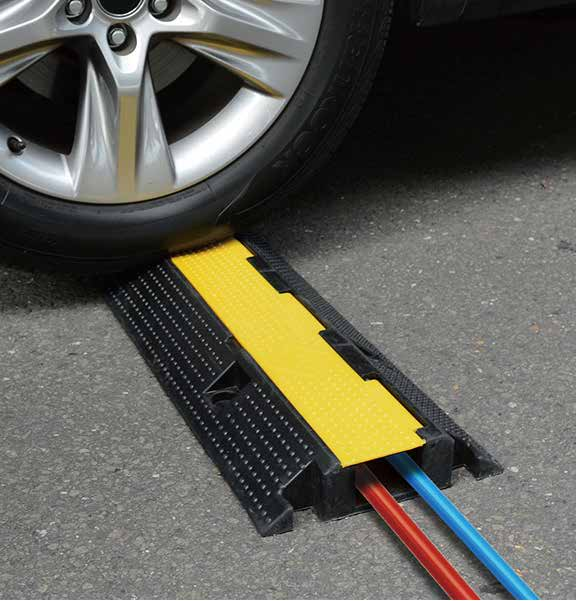
Cable management represents one of the most critical yet often overlooked aspects of maintaining safe, efficient operations across construction sites, events, and warehouses. With electrical cables, networking wires, and temporary power lines frequently running across high-traffic areas, the risk of accidents, equipment damage, and operational disruptions increases exponentially without proper protection systems in place.
Professional cable protectors serve as essential safety infrastructure, creating secure pathways for cables while allowing pedestrian and vehicular traffic to pass safely overhead. These protective systems have become indispensable across diverse industrial environments where temporary or permanent cable routing intersects with operational workflows, equipment movement, and personnel circulation.
Construction Site Cable Protection Requirements
Heavy Equipment and Vehicle Traffic Challenges
Construction environments present unique cable protection challenges due to the constant movement of heavy machinery, delivery trucks, and construction vehicles. Cable protectors designed for construction sites must withstand substantial weight loads, often exceeding 40,000 pounds for fully loaded concrete trucks and excavators. The continuous vibration, shifting ground conditions, and exposure to construction debris create demanding conditions that require robust protection solutions.
Professional-grade cable protectors for construction applications typically feature reinforced rubber compounds or heavy-duty polyurethane construction with embedded steel reinforcement. These materials provide the necessary durability to withstand repeated compression cycles from construction equipment while maintaining their protective integrity throughout extended project timelines. The modular design of quality cable protectors allows for easy reconfiguration as construction phases evolve and cable routing requirements change.
Weather Resistance and Environmental Durability
Construction sites expose cable protectors to extreme weather conditions, temperature fluctuations, and environmental hazards that can compromise lesser protection systems. Quality cable protectors incorporate weather-resistant materials that maintain flexibility in sub-freezing temperatures while resisting degradation from UV exposure, chemical spills, and moisture infiltration. This environmental resilience ensures consistent performance throughout seasonal changes and diverse climatic conditions.
The drainage design of professional cable protectors prevents water accumulation that could compromise electrical safety or create slip hazards. Integrated water channels and permeable construction materials allow moisture to escape while maintaining the structural integrity of the protection system. This feature proves particularly critical in outdoor construction environments where water management directly impacts both safety and operational efficiency.
Event Application Specifications and Requirements
Pedestrian Safety and ADA Compliance
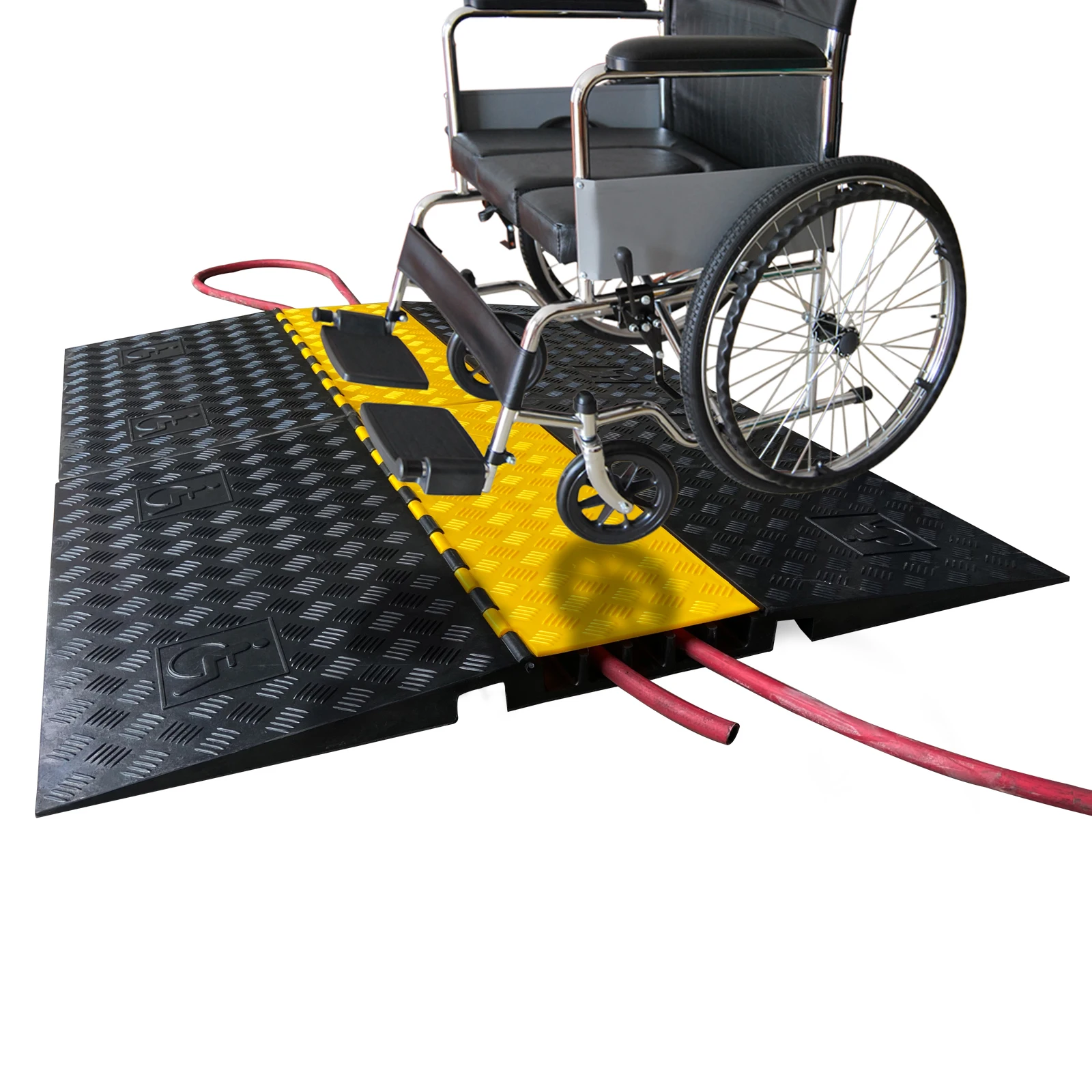
Event environments require cable protectors that prioritize pedestrian safety while maintaining accessibility compliance for individuals with disabilities. ADA-compliant cable protectors feature ramped edges with specific slope angles that accommodate wheelchairs, mobility scooters, and other assistive devices while preventing trip hazards for walking attendees. The surface texture of quality cable protectors provides adequate traction to prevent slips while remaining comfortable for foot traffic.
Professional event cable protectors incorporate high-visibility colors and reflective elements that enhance safety awareness in varying lighting conditions. The low-profile design minimizes visual obstruction while providing clear pathway definition that guides attendee movement patterns. These visibility features prove essential for evening events, outdoor festivals, and indoor venues with complex lighting schemes where cable locations might otherwise pose safety risks.
Rapid Deployment and Event Logistics
Event setup schedules demand cable protectors that can be deployed quickly and efficiently without requiring specialized tools or extensive labor resources. Modular cable protectors with interlocking connections allow event crews to create continuous protection pathways rapidly while accommodating last-minute routing changes as event requirements evolve. The lightweight yet durable construction of modern cable protectors facilitates transportation and handling during setup and breakdown phases.
Multi-channel cable protectors optimize event logistics by accommodating various cable types within a single protection system. This consolidation reduces the number of individual protection units required while simplifying routing planning for audio, video, power, and networking cables. The organizational benefits extend to inventory management, where fewer protection components reduce storage requirements and setup complexity for event production teams.
Warehouse and Industrial Facility Applications
Material Handling Equipment Compatibility
Warehouse environments require cable protectors that seamlessly integrate with material handling equipment operations, including forklifts, pallet jacks, and automated guided vehicles. The height profile of industrial cable protectors must remain low enough to prevent interference with equipment clearances while providing adequate space for cable bundles and conduit systems. Professional warehouse cable protectors feature reinforced construction capable of withstanding repeated impacts from material handling equipment wheels and occasional overloading incidents.
The surface design of warehouse cable protectors incorporates features that prevent equipment damage while maintaining smooth operation of wheeled vehicles. Anti-slip textures provide adequate traction for personnel while remaining sufficiently smooth to prevent premature wear on equipment tires and wheels. This balance ensures long-term cost effectiveness by extending both equipment life and cable protector durability in high-traffic industrial environments.
Permanent Installation and Maintenance Considerations
Long-term warehouse installations require cable protectors designed for permanent or semi-permanent deployment with minimal maintenance requirements. Industrial-grade cable protectors incorporate materials that resist compression set, maintaining their protective height and cable capacity throughout extended service periods. The chemical resistance of professional cable protectors prevents degradation from cleaning chemicals, hydraulic fluid spills, and other industrial substances commonly encountered in warehouse environments.
Maintenance accessibility represents a critical design feature for warehouse cable protectors, allowing facility personnel to inspect, clean, and service protected cables without removing the entire protection system. Hinged covers or removable top sections enable routine maintenance while maintaining continuous protection during cable servicing operations. This accessibility reduces maintenance downtime and supports proactive cable management practices that prevent equipment failures and operational disruptions.
Selection Criteria and Performance Standards
Load Rating and Structural Specifications
Proper cable protector selection requires careful analysis of anticipated load conditions, including vehicle weights, frequency of traffic, and impact forces specific to each application environment. Professional cable protectors carry specific load ratings that define maximum safe operating limits for various vehicle types and loading conditions. These ratings typically specify both static load capacity and dynamic load limits that account for impact forces from moving equipment.
The structural engineering of quality cable protectors incorporates safety factors that provide reliable performance under real-world conditions that may exceed theoretical design parameters. Reinforcement patterns, material selection, and geometric design work together to distribute loads effectively while maintaining protective coverage for enclosed cables. Understanding these structural specifications enables facility managers to select appropriate protection systems that provide long-term reliability without over-engineering costs.
Cable Capacity and Routing Flexibility
Effective cable protectors must accommodate current cable requirements while providing expansion capacity for future installations and modifications. Multi-channel designs allow segregation of different cable types, preventing interference between power, data, and control circuits while maintaining organized routing patterns. The internal dimensions of cable protector channels should provide adequate clearance for cables, connectors, and junction points without creating excessive compression that could damage cable insulation or compromise signal integrity.
Professional cable protectors incorporate features that facilitate cable installation and removal without requiring disassembly of the protection system. Smooth internal surfaces prevent cable damage during installation while providing adequate space for proper bend radius requirements. These design considerations ensure that cable protectors enhance rather than complicate cable management practices, supporting efficient installation and maintenance procedures throughout the system lifecycle.
FAQ
What weight capacity should cable protectors have for construction site use?
Construction site cable protectors should typically support minimum loads of 40,000 to 50,000 pounds to accommodate fully loaded concrete trucks, excavators, and other heavy construction equipment. Professional-grade protectors often exceed these minimums, with some models rated for loads up to 80,000 pounds to provide adequate safety margins for unexpected overloading conditions that commonly occur in dynamic construction environments.
How do ADA-compliant cable protectors differ from standard models?
ADA-compliant cable protectors feature specific ramp angles typically not exceeding 1:12 slope ratio, with smooth transitions that accommodate wheelchairs and mobility devices. These protectors include tactile surface indicators, high-contrast colors for visual identification, and maximum height restrictions that prevent accessibility barriers while maintaining effective cable protection for event and public facility applications.
Can cable protectors be used permanently in warehouse environments?
Yes, industrial-grade cable protectors are specifically designed for permanent warehouse installation, featuring materials that resist compression set, chemical degradation, and mechanical wear from continuous material handling equipment traffic. Permanent installations require protectors with maintenance access features, integrated mounting systems, and materials certified for long-term industrial exposure conditions.
What factors determine the appropriate cable protector channel size?
Channel sizing depends on cable bundle dimensions, connector clearances, bend radius requirements, and future expansion needs. Professional installations typically specify channels with 25-40% additional space beyond current cable requirements to accommodate proper bend radius, thermal expansion, and future cable additions without compromising protection effectiveness or installation accessibility.