 EN
EN

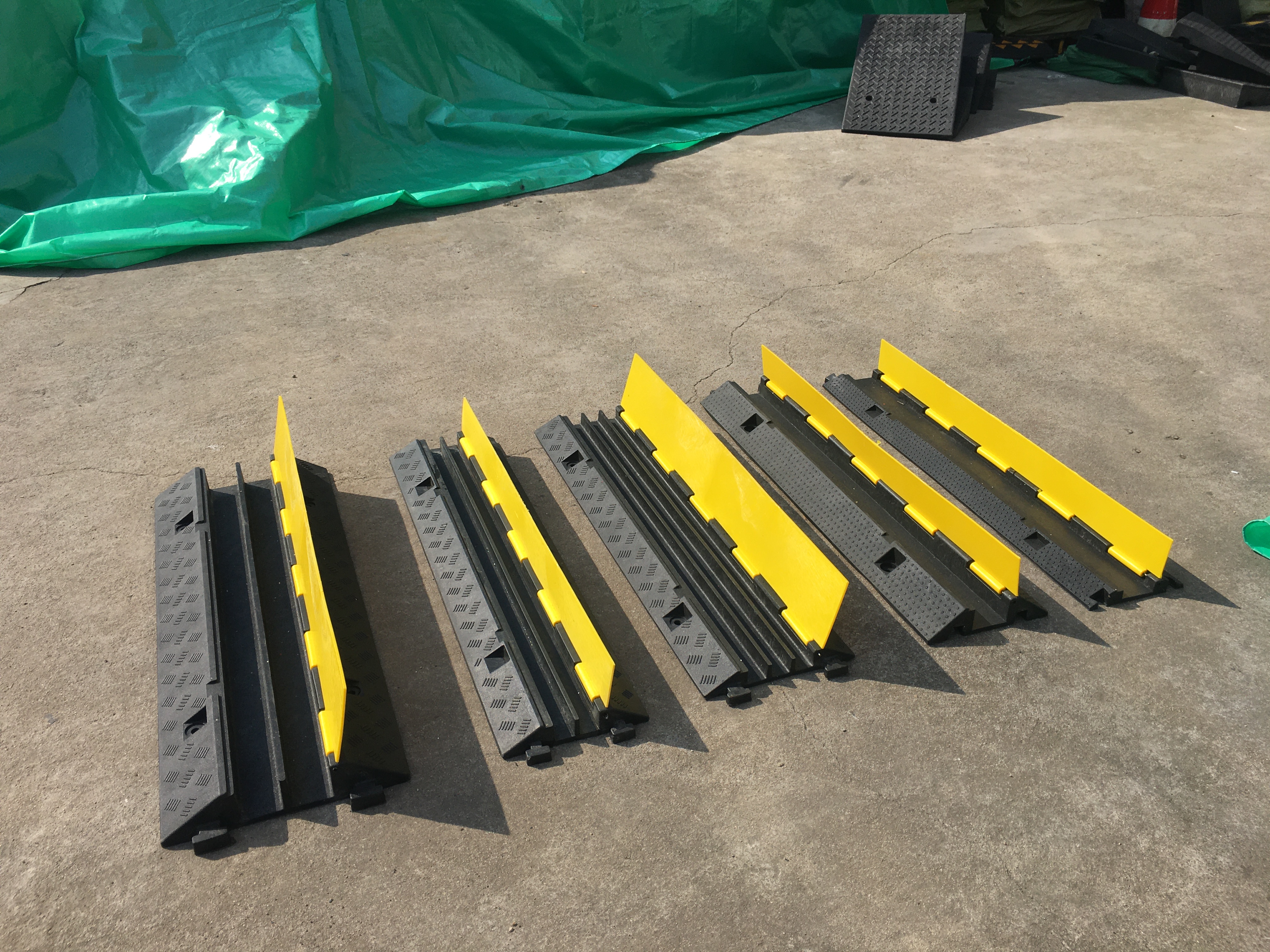
Managing cable protection in temporary installations, events, and construction sites requires solutions that balance durability with portability. Traditional cable ramps often present storage and transportation challenges due to their rigid construction, making them impractical for applications requiring frequent setup and breakdown. This limitation has driven the development of innovative foldable cable ramps that address the core need for quick deployment while maintaining structural integrity under heavy loads.
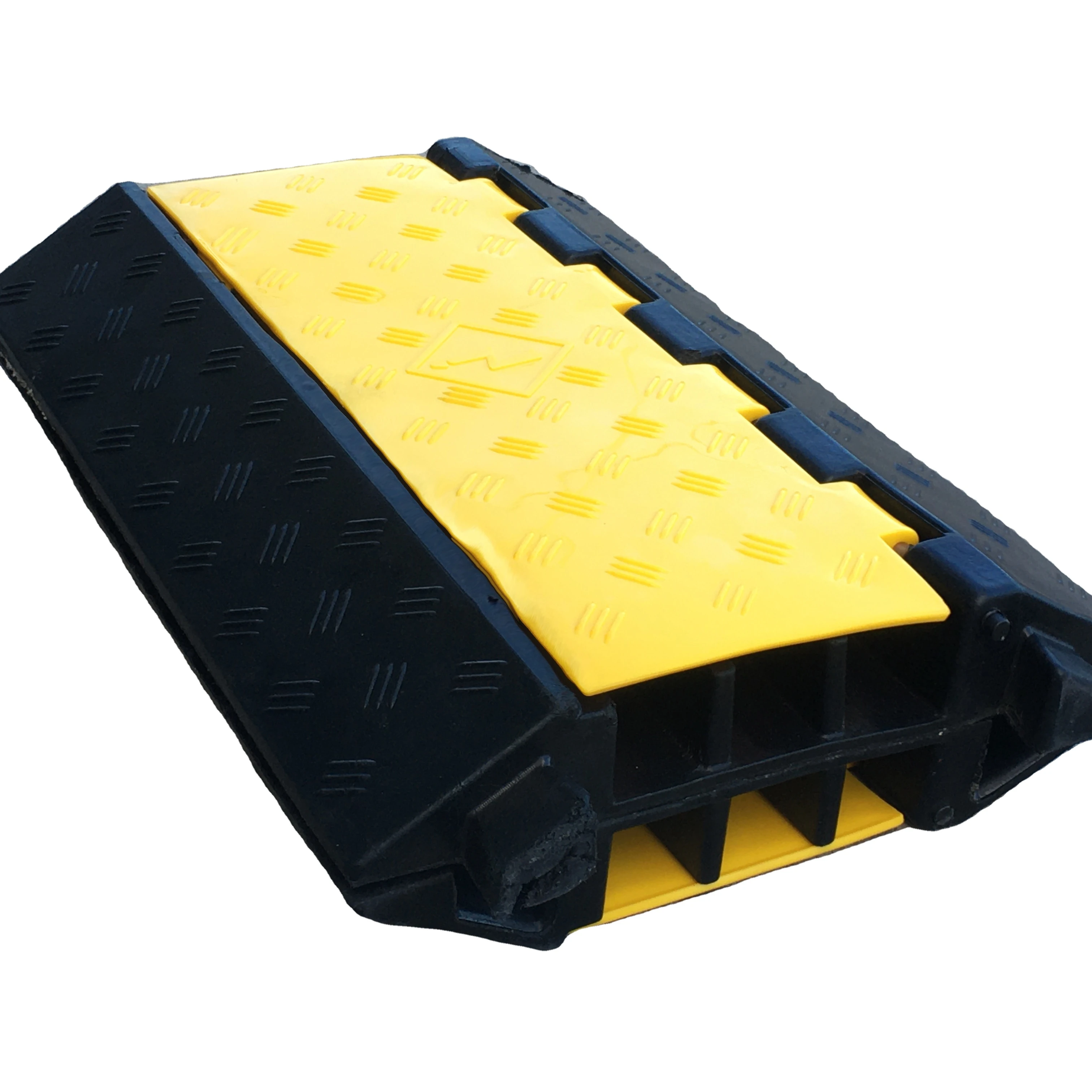
The evolution of foldable cable ramps represents a significant advancement in temporary cable protection technology, offering space-efficient storage solutions without compromising on safety or load capacity. These specialized protective systems feature engineered folding mechanisms that allow them to collapse to a fraction of their deployed size, making them ideal for organizations that need to maximize storage efficiency while maintaining rapid deployment capabilities for various applications.
Design Engineering Behind Foldable Cable Ramp Systems
Structural Mechanics of Folding Mechanisms
The engineering foundation of foldable cable ramps centers on sophisticated hinge systems that distribute weight loads evenly across the structure while maintaining flexibility for folding operations. These mechanisms typically employ reinforced pivot points constructed from high-strength materials that can withstand repeated folding cycles without structural degradation. The design challenge involves creating joints that remain rigid under load while allowing smooth folding when not in use.
Modern folding mechanisms incorporate multiple design approaches, including accordion-style folding that allows sections to stack compactly, and bi-fold designs that create a book-like folding action. Each approach offers specific advantages depending on the intended application and storage requirements. The structural integrity depends on precise engineering tolerances that ensure proper load distribution across all folding points during deployment.
Material Selection for Durability and Flexibility
Material engineering for foldable cable ramps requires balancing flexibility for folding operations with strength for load-bearing capacity. High-grade polyurethane and reinforced rubber compounds provide the necessary flexibility while maintaining resistance to environmental factors such as temperature extremes, UV exposure, and chemical contact. These materials undergo extensive testing to ensure they maintain their folding properties throughout their operational lifespan.
Advanced composite materials increasingly appear in premium foldable cable ramp designs, incorporating fiber reinforcement within flexible matrices to achieve superior strength-to-weight ratios. This material innovation enables manufacturers to create systems that fold compactly while supporting substantial vehicle loads, addressing the traditional trade-off between portability and load capacity that has historically limited temporary cable protection solutions.
Deployment Speed Advantages in Professional Applications
Time Efficiency in Event Setup Operations
Professional event management demands rapid deployment of safety infrastructure, where foldable cable ramps provide significant time savings compared to traditional rigid alternatives. Setup teams can deploy these systems in minutes rather than the extended periods required for assembling modular rigid ramps, directly impacting project timelines and labor costs. The folding design eliminates the need for complex assembly procedures, reducing both setup time and the potential for installation errors.
Event applications particularly benefit from the speed advantages during breakdown operations, where crews face tight deadlines for venue clearance. Foldable cable ramps can be quickly collapsed and removed, enabling faster venue transitions and reducing overtime labor costs associated with extended breakdown periods.
Construction Site Mobility Requirements
Construction environments demand cable protection solutions that can adapt to changing site conditions and relocate as work progresses. Traditional rigid cable ramps often remain in fixed positions throughout project phases, limiting their utility as site layouts evolve. Foldable cable ramps address this limitation by enabling rapid relocation to support changing electrical and data infrastructure needs as construction phases advance.
The mobility advantage becomes particularly important in large construction projects where cable routing requirements change frequently based on work zone priorities and safety considerations. Construction teams can quickly redeploy foldable cable ramps to accommodate new equipment positions, temporary power distributions, and safety zone modifications without requiring significant labor investment or specialized tools for reconfiguration.
Space Optimization Benefits for Storage Management
Warehouse Efficiency Improvements
Storage efficiency directly impacts operational costs for organizations maintaining cable protection inventories, where foldable cable ramps provide substantial space savings compared to rigid alternatives. Traditional cable ramps require dedicated storage areas with sufficient clearance for their full deployed dimensions, while foldable designs can be stored in compact configurations that maximize warehouse utilization and reduce storage costs.
The space reduction achieved through folding mechanisms typically ranges from 60% to 80% compared to rigid equivalents, enabling organizations to maintain larger inventories within existing storage facilities. This efficiency improvement becomes particularly valuable for rental companies and event management firms that require substantial equipment inventories to support multiple simultaneous projects while managing storage overhead costs.
Transportation Volume Optimization
Transportation efficiency gains from foldable cable ramps extend beyond simple volume reduction to include loading efficiency and vehicle capacity optimization. The compact folded configuration allows for more efficient packing arrangements that maximize trailer space utilization while reducing the number of transportation trips required for equipment delivery and retrieval operations.
Fleet managers report significant cost reductions in transportation expenses when utilizing foldable cable protection systems, as more equipment can be transported per vehicle load while maintaining proper load distribution and safety margins. This efficiency improvement becomes particularly important for organizations serving large geographic territories where transportation costs represent a significant operational expense component.
Load Capacity Considerations in Folding Designs
Weight Distribution Analysis
The structural analysis of foldable cable ramps requires careful consideration of how folding mechanisms affect load distribution patterns under various loading conditions. Engineering teams must ensure that folding joints do not create stress concentration points that could compromise the system's load-bearing capacity or lead to premature failure under repeated loading cycles.
Advanced finite element analysis techniques enable manufacturers to optimize folding joint designs for uniform load distribution across the entire ramp structure. This analysis ensures that the folding capability does not compromise the system's ability to support heavy vehicles and equipment while maintaining safety margins consistent with rigid cable protection alternatives.
Dynamic Loading Performance
Dynamic loading conditions present unique challenges for foldable cable ramps, as moving vehicles create impact forces and vibrations that must be absorbed and distributed effectively across the folding structure. The design must account for both static weight loads and dynamic forces generated by vehicle acceleration, braking, and directional changes while traversing the protection system.
Testing protocols for foldable cable ramps include extensive dynamic loading evaluations that simulate real-world traffic patterns and vehicle interactions. These evaluations ensure that the folding mechanisms maintain structural integrity under repeated dynamic loading while preserving the system's ability to provide consistent cable protection performance throughout its operational lifespan.
Maintenance and Longevity Factors
Folding Mechanism Durability
Long-term performance of foldable cable ramps depends heavily on the durability of folding mechanisms under repeated operation cycles and environmental exposure. Maintenance requirements focus on preserving the flexibility and strength of folding joints while preventing accumulation of debris or corrosion that could impair folding operations or compromise structural integrity.
Preventive maintenance protocols typically include regular inspection of folding mechanisms for signs of wear, proper lubrication of moving components, and cleaning procedures that prevent debris accumulation in folding joints. These maintenance requirements remain minimal compared to complex modular systems while ensuring consistent performance throughout the product's operational lifespan.
Environmental Resistance Properties
Environmental durability of foldable cable ramps requires materials and construction methods that resist degradation from UV exposure, temperature cycling, chemical contact, and moisture infiltration while maintaining folding functionality. The design must ensure that environmental factors do not compromise either the structural integrity or the folding mechanisms over extended deployment periods.
Material selection focuses on compounds that maintain flexibility across wide temperature ranges while resisting environmental degradation that could affect folding performance. Advanced formulations incorporate UV stabilizers, antioxidants, and other protective additives that preserve material properties and folding functionality throughout extended outdoor exposure periods.
FAQ
How much space do foldable cable ramps save compared to rigid alternatives?
Foldable cable ramps typically reduce storage volume by 60% to 80% compared to rigid equivalents of similar load capacity. The exact space savings depend on the specific folding mechanism design and the number of folding sections, with some advanced designs achieving even greater space reductions through innovative folding patterns.
What load capacities can foldable cable ramps support?
Modern foldable cable ramps can support load capacities ranging from light pedestrian traffic up to heavy industrial vehicles exceeding 40 tons, depending on the specific design and construction materials. The folding mechanism does not inherently limit load capacity when properly engineered, allowing these systems to match the performance of rigid alternatives.
How quickly can foldable cable ramps be deployed in emergency situations?
Deployment time for foldable cable ramps typically ranges from 30 seconds to 2 minutes for standard configurations, depending on the system size and complexity. This rapid deployment capability makes them particularly valuable for emergency response situations where cable protection must be established quickly to maintain safety and operational continuity.
Do folding mechanisms require special maintenance procedures?
Maintenance requirements for foldable cable ramps focus on keeping folding mechanisms clean and properly lubricated, with inspection intervals typically recommended every 6 months for heavy-use applications. The maintenance procedures remain straightforward and do not require specialized tools or extensive technical knowledge to perform effectively.